• Skip to primary navigation
  • Skip to main content

My Life After Prison

Resources for the incarcerated and their families.

  • Home
  • About
  • Contact Us
  • BREAKING NEWS !!
  • Florida
  • Louisiana
  • Show Search
Hide Search

TRAUMA

Can’t We Just Get Off Of This Insane Merry-Go-Round?!

William Kissinger · December 12, 2025 · Leave a Comment

The Mis-Adventures Of A Road Warrior In The Fight Against Capital Punishment
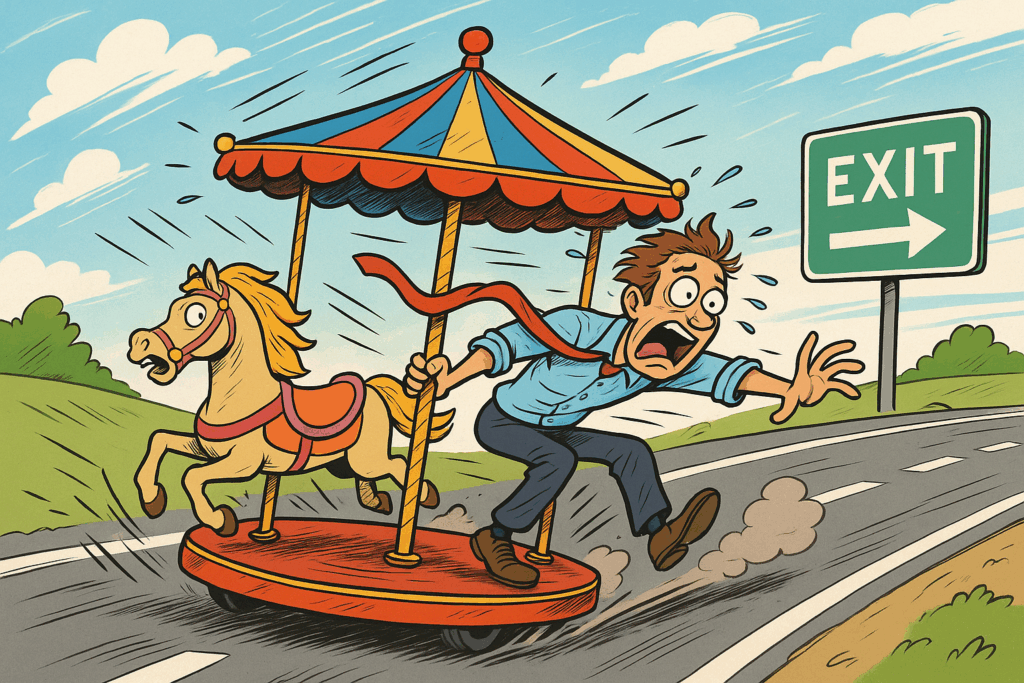
AI-Generated Image of A Clownish Merry-Go-Round Trying To Exit A Freeway

I write about the death penalty. Mostly in two states – Louisiana and Florida. But on the whole, everywhere in America. I also write a lot about prison as I have a whole lot of experience with being a prisoner there, and I like to write from the POV of experience and authority. 47 years of experience, I believe, qualifies me in that regard.

I happen to take executions personally, as I have been personally impacted by the deliberate and premeditated killing of a human being by an impersonal entity commonly referred to as a “state.” See my earlier story, published by HARVARD Inquest, “The Last Breakfast.” It is a coldly, well-planned and deeply impactful process that severely impacts families and turns them all into more victims. In fact, victims are used by this “state” as a promotional gimmick to justify their actions and actually promote their use as an example of “justice.” Florida goes a step further and has laws to shield everything about the process.

Execution of a criminal offender does NOT provide closure to a family member of a murdered victim. And, one of my personal heroes, who has an incredibly touching story, SuzAnn Bosler, used her forgiveness of the killer of her father to advocate for his clemency, even though he tried to kill her as well.

SuzAnn Bosler, Whose Father Was Murdered In Front Of Her, And Who Was Left For Dead By The Killer Holds His Photo While Explaining Why She Forgave Him And Tried To Save Him From Execution

My personal interviews with SueZann left me heartbroken and weeping as she shared her story. Left for dead, she survived and eventually forgave the killer. She even hired her own attorney in an effort to save his life. Executions take a horrible toll on those who actually oversee and perform the executions themselves. The interviews with Allen Ault, the former Commissioner of Corrections for the State of Georgia, clearly tell us of this.

The lowly prison guards who participated in executions, underpaid and often underqualified to perform even the most menial of jobs, have been driven to desperate lengths. Because of a lack of support and trauma, they have often felt “less than,” and became “a murderer.” Some have resorted to suicide. Almost every single one of them changed their politics and their minds about executions after participating in one.

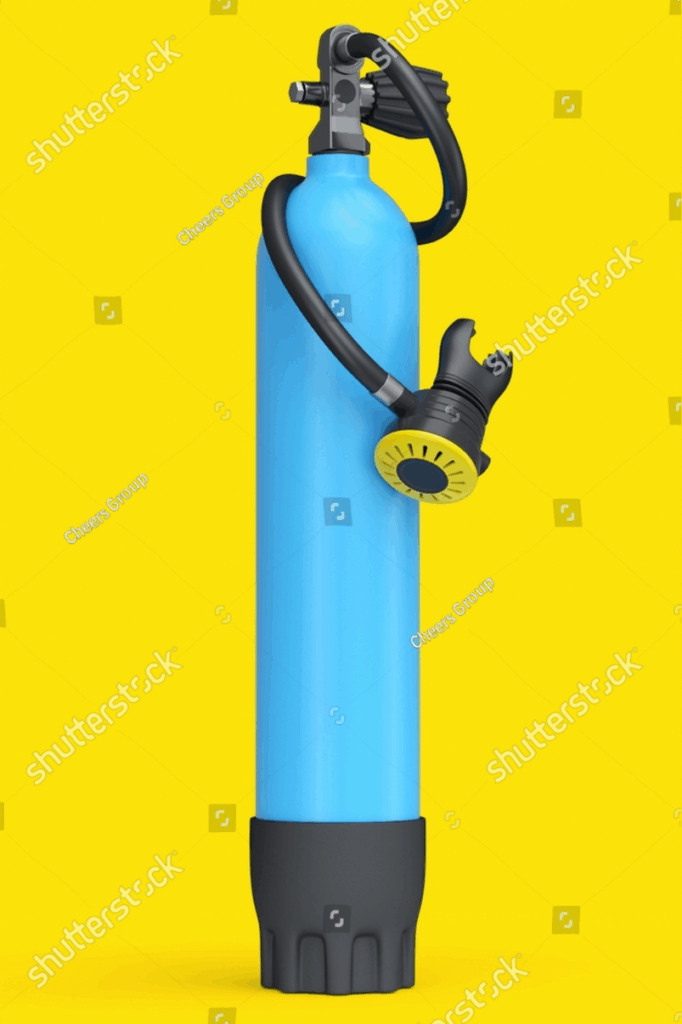
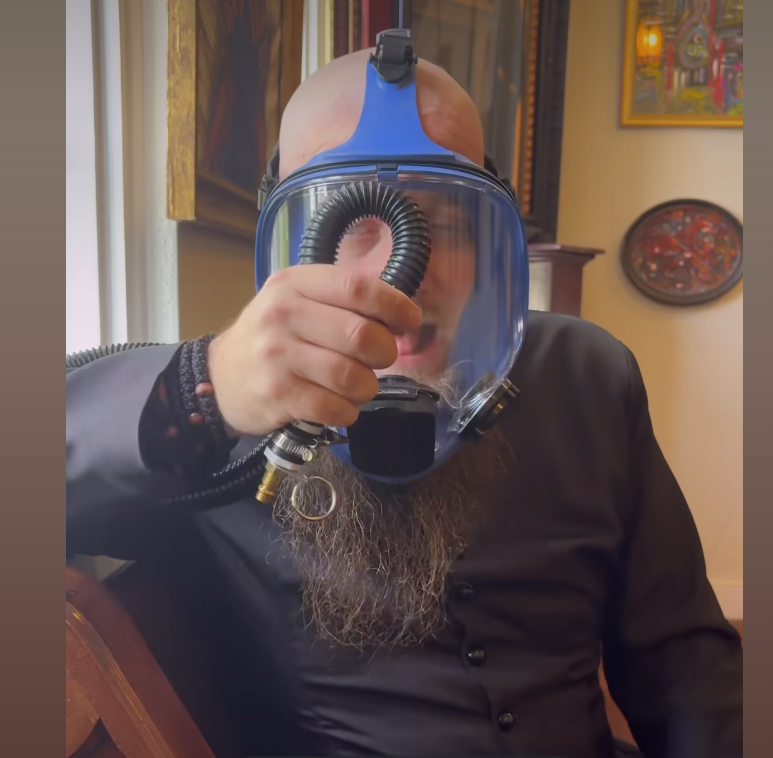
America has a wide variety of methods of killing people. The most common are (1) Lethal injection, (2) firing squad, (3) Electric chair and (4) nitrogen hypoxia suffocation. Nitrogen hypoxia is definitely an abomination, first used in Alabama, and later adopted in 3 other states: Alabama, Arkansas, Louisiana, Mississippi, and Oklahoma. Ohio and Nebraska have bills introduced as well to authorize the use of nitrogen to kill prisoners. All “Bible belt” states, all have MAGA “Christian” governors. Everyone is entitled to have their own view of Christianity; mine is that it is impossible for one to be both “pro-Life” AND a supporter of capital punishment.
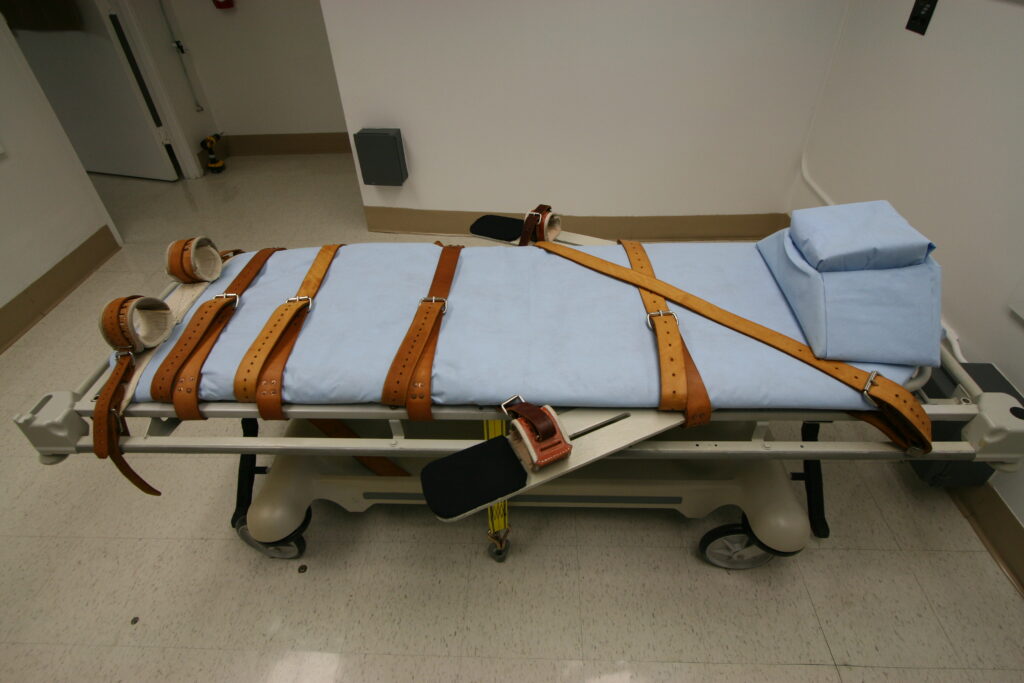
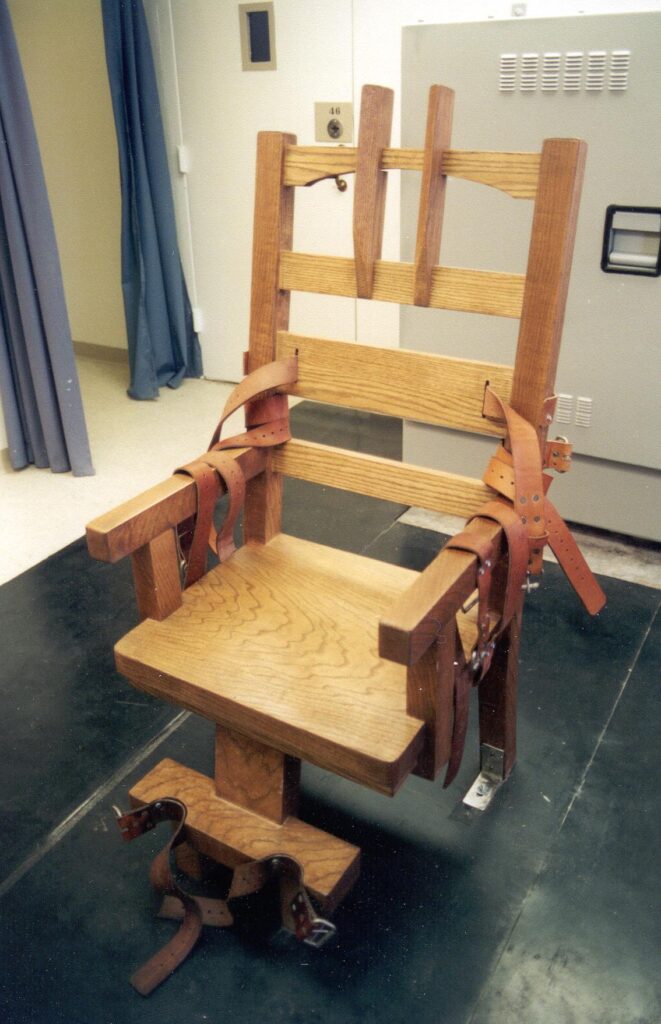
Florida’s Execution Gurney
Florida’s Electric Chair
Firing Squad Chair
Nitrogen Gas Cylinfer Tank
Rev. Dr. Jeff Hood Demonstrating Nitrogen Gas Hypoxia Mask Placed On Condemned Inmate

All of the methods are horrific.

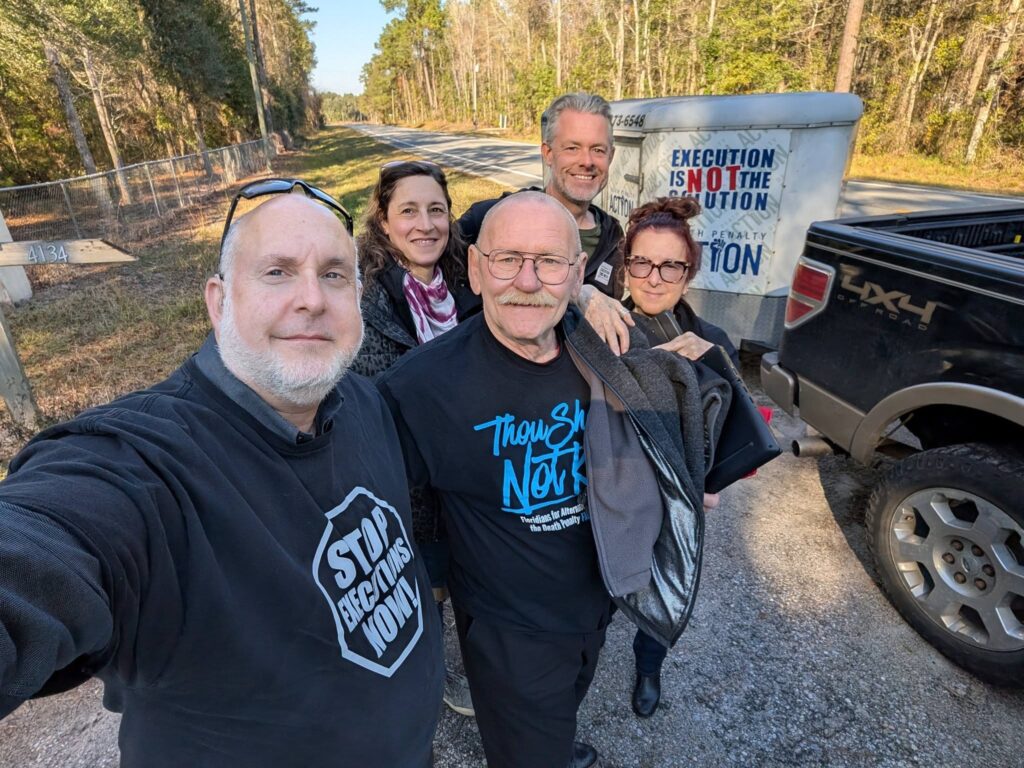
Let me tell you about my adventure with DeathPenaltyAction and Floridians for Alternatives to the Death Penalty yesterday, Tuesday, December 9, 2025. It was an exhausting day, beginning with a calm awakening at 4:00am. I hastily drank coffee, answered a flurry of overnight emails, fed and walked the dogs, took a shower and shaved, went outside and smoked a cigarette, and came back in to prepare for the trip.

I went to Tallahassee with my friend, Robert, and was picked up at 9:30 by the wonderful Grace Ellen, Executive Director of Floridians for Alternatives to the Death Penalty. We went to the Good Shepherd Church, where we attended a prayer service for the soon-to-be-executed Mark Allen Geralds, the victim (Tressa Pettibone) and her family, and everyone in the chain-of-command involved in the execution. Grace, Abraham – one of the original founders of FADP – and SuzAnn spoke about forgiveness and the urgency of stopping executions and why they are so wrong.

We finished loading the trailer with shirts and signs, and then set off on our excursion to the office of Governor Ron DeSantis, the most prolific of all of Florida’s executing governors.
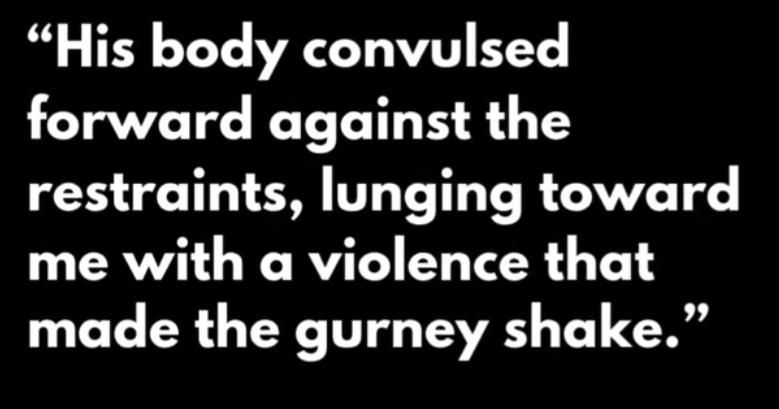
Quote from Rev. Dr. Jeff Hood After Witnessing The Nitrogen Hypoxia Execution Of Anthony Bell
Ringing Of The Bell
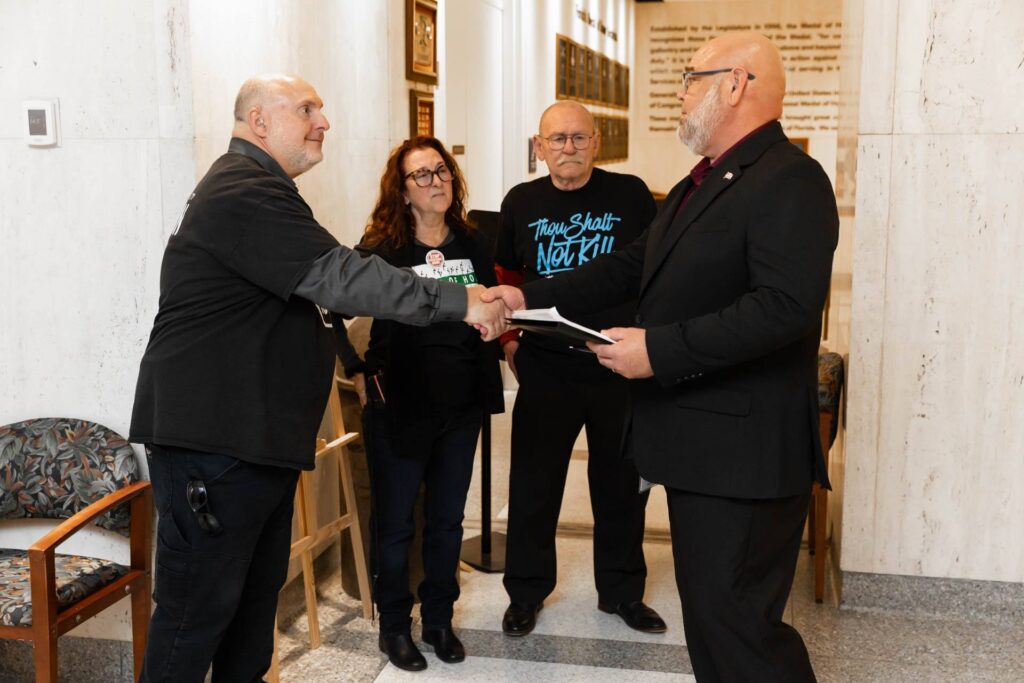
Presenting Our Petitions
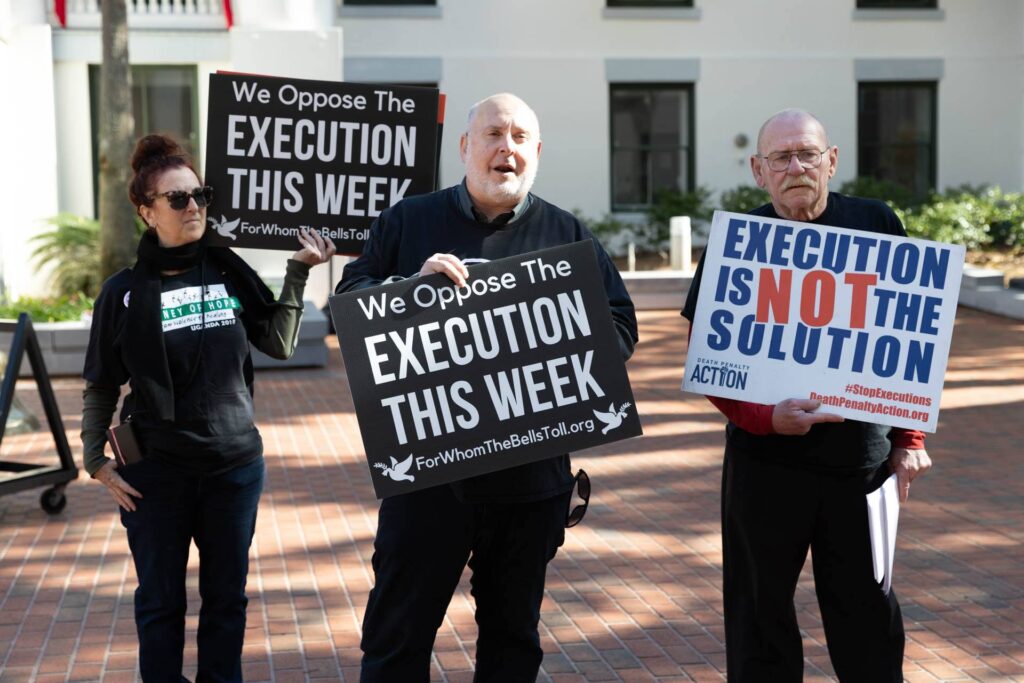
Videoing Our Protests At The Governor’s Office

The media was waiting for us and we were videod, and gave our interviews, and proceeded to the Governor’s Office. Following a security search and wanding, we made our way to the reception desk where we interacted with her and she summoned someone to meet with us. The Governor, obviously, would not come out to meet and talk with us. This is the 18th execution he has ordered to be carried out this year. He cannot be proud of what he is doing, after all, but he did send a couple of very nice Constituent Services Representatives to meet with us, and again we pleaded our case and presented petitions from both groups.
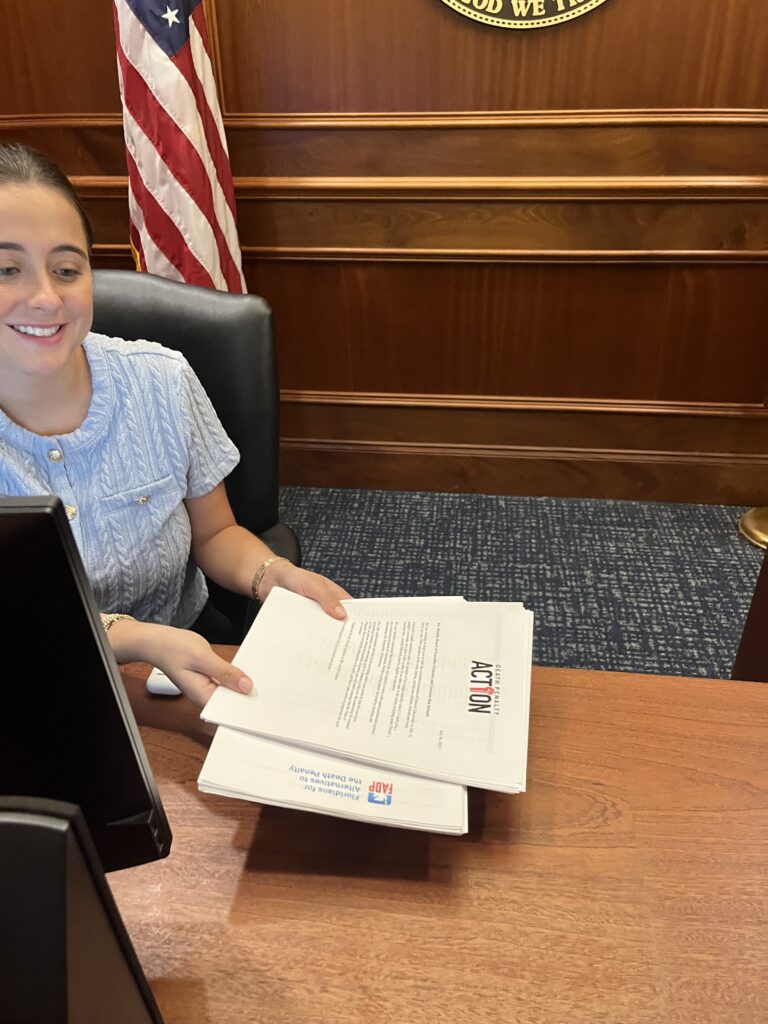
Our Petitions

Abe conducted the majority of the presentation explaining why we protest every execution and all of what is wrong with capital punishment. SueZann told her incredibly powerful story, and I touched on the wrongful conviction aspects and explained how Florida leads the entire nation in exonerations from their death row. Virtually every single exoneration from Louisiana involved one common factor – prosecutorial or official misconduct and illegal police conduct – torture, witness coercion or intimidation, and/or placing of informants in defendant’s cells who then gave false testimony to obtain convictions.

Later that evening, many who opposed the execution gathered at the state prison and held their service with Father Phil and the congregants from Our Lady of Lourdes (Daytona Beach). There were prayers and there was song and there was homily, followed by the ringing of the same bell – the same heavy cast bell that Abe totes with him everywhere he goes, to every execution, to every vigil.
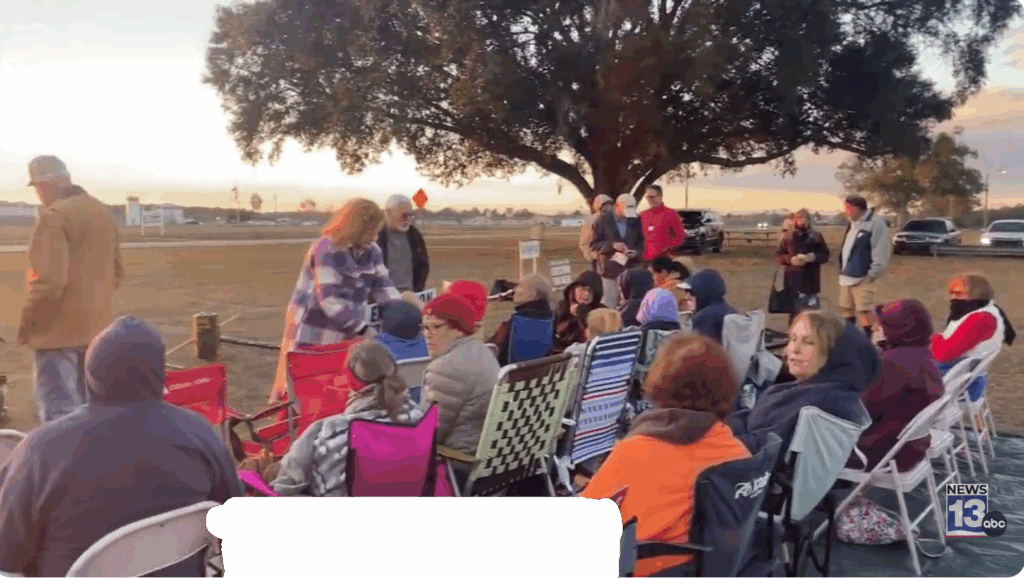
Parishioners of Our Lady of Lourdes Church (Daytona Beach) Outside The State Prison

The witnesses and the lawyers who attend the executions have told Grace that the ringing of the bell can definitely be heard inside the execution chamber.

Think about that. The solemn peal of the church bell, rung by protesters and the devout gathered beyond the prison walls, seeps through concrete and steel like a funeral hymn, impossible to ignore.

For the condemned, each toll of the bell and its’ echo becomes a sacred reminder of humanity reaching through the void, a gesture that they are seen in their final hour. For the executioners, it strikes deeper than their strict and formal protocols – an unwanted rhythm tapping at their conscience, breaking the sterile silence and the solemnity they rely on. Even the guards and warden feel the weight of it, the bell making the air heavier, as if time itself pauses to listen.

Finally, Abe and the others returned me to my home, my safe space, and rest from my journeys through the killing fields of Florida. There is another execution scheduled for just 8 days from today. Yet, we will not, we cannot be silenced. They must hear us.
Mark Geralds (Mark Allen Geralds), who was executed by lethal injection for the 1989 murder of Tressa Pettibone, was pronounced dead at 6:15 p.m. on Tuesday, December 9, 2025. 

The execution took place at the Florida State Prison in Starke, Florida.


So, I need help now. This publication and sight is entirely reader-supported, and I can only continue doing it with your help. You can either buy me a coffee by clicking here:

donate to my GoFundMe, or you can SUBSCRIBE. I’ll be happy either way you choose – but, I really like the subscriptions because it means you’ll be around a lot longer. I’m dropping a button where you can do it very easily, or you can click any of the links above to help.


TRAUMA – Where It Leads

William Kissinger · November 26, 2025 · Leave a Comment

And where it comes from…

What IS trauma?

Trauma is defined as an emotional, psychological, or physical response to an event or series of events that are distressing or harmful, often overwhelming a person’s ability to cope.

This can include experiences such as violence, sexual abuse or physical abuse, accidents, or natural disasters that lead to feelings of intense fear, helplessness, or horror.

Trauma can manifest in various ways, including anxiety, depression, and post-traumatic stress disorder (PTSD), affecting an individual’s daily life, relationships, and overall mental health.

Understanding trauma is essential, especially in contexts like prisons, where individuals may face unique and compounding challenges that amplify their experiences of distress.

Here’s another question:

Does prison lead to trauma, or does trauma lead to prison? I think that in the majority of cases, trauma leads to prison…but prison ALWAYS leads to more trauma.

Trauma significantly influences why some people end up in prison. It often leads to harmful behaviors and poor coping skills. Experiencing violence, abuse, or serious neglect can warp a person’s self-view and how they see the world, leading to increased anxiety, aggression, or impulsive actions.

These traumatic events may push some to commit crimes for survival or to regain a sense of control. Furthermore, the lack of mental health resources and support can leave traumatized individuals without the means to heal, making them more susceptible to the justice system. In essence, unresolved trauma can create a tough cycle to break, contributing to the high number of traumatized people in prisons.

Trauma often leads to harmful behaviors and poor coping skills.

Trauma often has its origins in adverse childhood experiences, such as abuse within the home, unstable family structures like single-parent households, exposure to substance abuse, and community crime.

A young child growing up in such an environment may first feel unsafe and neglected, leading to emotional and behavioral issues. As they transition into adolescence, feelings of abandonment or rage may take hold, oftentimes impairing their ability to form healthy relationships and cope with stress.

Non-violent Gathering of Youth – Courtesy Shutterstock

If these individuals begin seeking “unhealthy” outlets—such as engaging in drug use or alcohol or associating with delinquent peers—they may further spiral into risky behaviors. This cycle of trauma can escalate, leading them into criminal activities as a means of survival or providing an escape. The compounded effects of untreated trauma can create a firmly entrenched path, ultimately steering them toward the criminal justice system and incarceration.

Home to School to Prison…and the Pipeline There

The “home to school” path for a child experiencing trauma is critical in understanding how environments influence their emotional and psychological well-being. For many children, home life can be a source of significant distress due to factors such as domestic violence, neglect, substance abuse, or instability. In the beginning, school may represent a refuge from these challenges, offering a comforting structure, a form of social interaction, and offering the potential for academic success.

Upon arriving at school, however, the child’s experience may be very complex. Some children find school to be a safe haven, as it allows them to escape the traumatic conditions at home, even if temporarily. In these instances, the structure provided by a school environment can facilitate healing in that it gives children a space where they can engage with peers and, as importantly, caring adults, which is essential for their emotional development.

Conversely, for some children, school can present a new set of challenges that may reinforce existing trauma. Factors such as bullying, academic pressure, social isolation, or rigid disciplinary practices can turn school, at first a refuge, into a traumatic environment. This contradiction can lead to heightened anxiety and distress, making the journey from home to school fraught with tension rather than relief.

School Classroom – courtesy Shutterstock

Additionally, trauma can deeply affect a child’s ability to engage with their environment. Symptoms such as hyper-vigilance, emotional dysfunction, or difficulties in forming relationships can affect how a child interacts with teachers and fellow students. These challenges can create a cycle of trauma, where the child feels unsafe both at home and in school, reinforcing that sense of vulnerability and isolation.

So, the “home to school” path is not a straightforward and clear transition. It often involves a complex interplay of escaping one form of trauma only to potentially face another. In some cases, the traumatized child will find comfort in structured learning. Understanding these dynamics is crucial for educators and advocates in creating supportive school environments that recognize and address the broader impacts of trauma on children.

Is School a Refuge – Or a Place of More Trauma?

And, School To Prison…The “school to prison pipeline” is a complex phenomenon where students, particularly those from marginalized communities, face disciplinary actions in schools that often lead to law enforcement involvement. For a child already experiencing trauma—whether from economic instability, domestic violence, or community violence, or abuse—the pressures of this pipeline are magnified.

A Mind In Trauma

Traumatized children may exhibit behaviors such as aggression, withdrawal, or defiance, which are often misinterpreted by educators. Instead of receiving support, they may face harsh disciplinary measures, such as suspensions or expulsions. This pushes them further away from education. Factors such as lack of access to mental health resources, negative school climates, and socio-economic disparities can lead these children to feel alienated and disengaged. This only increases their chances of indulging in criminal activity as a way to cope or seek validation. Understanding these connections is crucial for developing interventions that address the root causes of behavior rather than simply reacting to the symptoms.

How does this progression work in real life? Let’s meet Marcus.

A young boy named Marcus grew up in a home filled with domestic violence, often witnessing his parents fight, his father often beating his mother. This led to him feeling emotionally neglected and very alone. The unstable home life caused him to struggle in school, making it hard to focus on his classes and to connect with fellow students. Failing to make this connection led to bullying. Frustrated and helpless, Marcus acted out by skipping classes and hanging out with older “friends” who seemed to understand his pain. He was soon engaging in petty theft. His rebellious behavior escalated, and he was eventually caught vandalizing school property, resulting in a troubling encounter with police.

Instead of receiving the support he needed, he was labeled a delinquent. Each time he came into contact with the authorities, his trauma deepened. This led to an arrest that put him on a path toward prison, continuing the cycle of trauma that started at home.

JUVENILE COURT PROCEEDINGS

Traumatized children may exhibit behaviors such as aggression, withdrawal, or defiance, which are often misinterpreted by educators. Instead of receiving support, they may face harsh disciplinary measures, such as suspensions or expulsions. This pushes them further away from education. Factors such as lack of access to mental health resources, negative school climates, and socio-economic disparities can lead these children to feel alienated and disengaged. This only increases their chances of indulging in criminal activity as a way to cope or seek validation. Understanding these connections is crucial for developing interventions that address the root causes of behavior rather than simply reacting to the symptoms.


JUVENILE COURT PROCEEDINGS

PRISON…And More Trauma

Juvenile Courtroom

What would have been the right time to intervene? What type of intervention would have been successful? Whose intervention would have been most valuable?

We will never be able to know. Marcus’ life continued to spiral out of control after he went to prison. By the time someone took the time and made the effort to intervene in his life, to attempt to get him to confront and defeat his trauma, it was too late. Marcus died of an overdose of fentanyl, alone, in a cell, in prison.

THIS is what “trauma” is, and what it does.

Below, you will find links to resources that may be of help. If trauma begins at home, that’s where it should be treated. Thank you for reading this!

TRAUMA RESOURCES FOR CHILDREN

TRAUMA RESOURCES FOR FAMILIES

RESOURCES WHEN THERE IS AN INCARCERATED PARENT

This post is dedicated to an unnamed Assistant Warden at Angola, who asked me to write about trauma, because they understand what trauma does, and where it leads.


Donate

DONATE TO MY LIFE AFTER PRISON

OR YOU CAN BUY ME A COFFEE ! (Or a pot of coffee!)

Please be sure to check out my Substack for more articles and commentary on efforts to end the death penalty. If you don’t already, please hit that SUBSCRIBE button, and share!

CLICK THE PICTURE TO GO TO MY SUBSTACK!

My Life After Prison

Copyright © 2025 · Website provided by Boomajoom