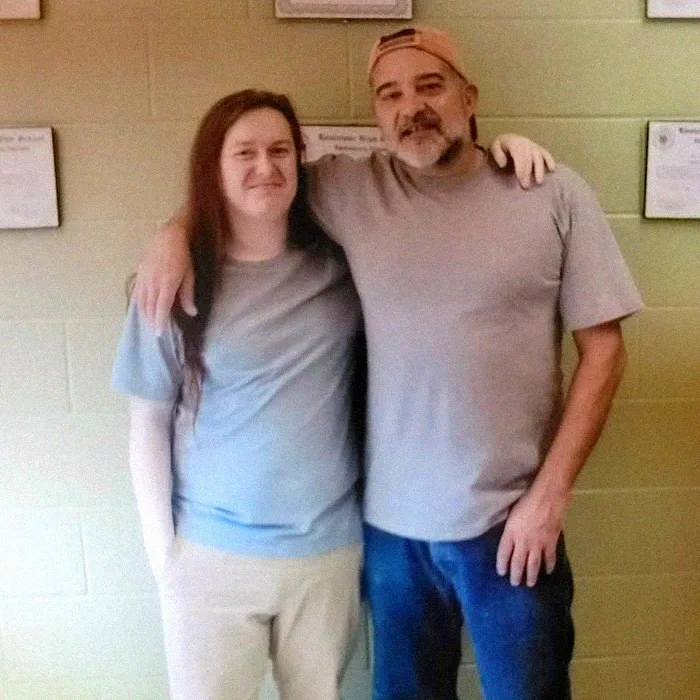
This is the first in a series of articles revolving around the case of Louisiana vs. Jimmie Christian Duncan. I say it’s a series because as of right now the case is still ongoing and there is no clear end in sight. For him, it may never end. As things develop and the situation progresses, I will provide updates.
Jimmie Duncan is on death row in Louisiana for a crime that many experts – and also quite ordinary people as well – say may never have even happened. He has been there for almost 32 years. I know him well. In fact, I used to sell him tacos, burritos, and cheeseburgers from the inmate club I was the founding president of, the Camp F VETS. I used to stop and talk to him if he was awake in the mornings when I picked up deli orders, or in the evenings when I delivered food, or on Tuesdays when I delivered fruit for indigent prisoners.
His case has become a gathering spot for wrongful conviction advocates primarily because of its connection to two of the most well-known names in forensic misconduct: Michael West and Steven Hayne. These discredited forensic figures have been linked to many wrongful convictions, many of which have been overturned, and of the overturned, 4 are death row veterans. Yet, in spite of mounting evidence that Duncan was convicted based on junk science, Louisiana continued to push onward with the tortuous path towards his execution.
Maybe it was because Louisiana wanted to conceal something – the falsehoods and junk science they were perpetuating, and the jailhouse informant they relied on – even after they knew he was lying to them. So, yes….this case is about 3 primary things: manufactured “evidence,” lying witnesses, and jailhouse snitches. This is actually a pretty common tactic in Louisiana – hiding evidence and coaching lying informants. And once caught, prosecutors and judges – and informants – have no choice: they have to keep lying and hiding.
Jimmie has ALWAYS proclaimed his innocence – from arrest to arraignment to trial to conviction and on through appeals to post-conviction relief applications – he has never wavered, and his story has never wavered. In the face of death, he has remained steadfast in declaring his innocence.
However, with the election of Jeff Landry to the governorship of Louisiana (he was attorney general under Jon Bel Edwards) and the ascendancy to attorney general of Liz Murrill, his situation became much more tenuous. In the waning months of his final term, in a move that shook Louisiana politics, John Bel Edwards, the former Governor of Louisiana, expressed his opposition to the death penalty, stating it was “so final” and “we know mistakes have been made”. He based his opposition on his religious faith and the “finality” of the punishment. Edwards also directed the Board of Pardons to consider clemency applications for all death row inmates in Louisiana, advocating for a “pro-life” approach.
Full of hope, capital appellate attorneys filed mass requests for clemency for the 56 men on death row in hopes that Edwards could commute their sentences before leaving office. Guess who stymied that effort? You’re right – Jeff Landry. Landry promptly filed legal pleadings to stop this effort, and the battle played out in court.
Although Duncan was included in the initial filing for clemency, The Innocence Project withdrew its clemency petition in the case of Jimmie Duncan. “The State has shown it is not taking the process of reviewing death row clemency petitions seriously, and Mr. Duncan has new, compelling evidence of innocence that must be considered.”
In spite of the “we know mistakes have been made” part of John Bel’s position, (since 1975, 12 individuals have been exonerated while residing on Louisiana’s death row), upon assuming office, Landry immediately announced a resumption of executions and Murrill jumped on and started rowing the boat. The legislature had hurriedly passed a series of bills which completely unraveled all of the positive changes to Louisiana’’s criminal justice system which had been brought about in a bi-partisan effort during Edward’s final term.
“Louisiana has a long record of convicting and sentencing to death people later found to be innocent. In the past three decades, the state has exonerated 11 people facing execution, among the highest such numbers in the country, according to The National Registry of Exonerations.”
On April 24, 2025, Jimmie’s death sentence and conviction were vacated by a Louisiana Judge and the evidence presented during evidentiary hearings in reaching that decision is appalling.
One footnote, in particular, I’m calling the “Wide Divide Note.” On page 7, of the court’s ruling vacating the conviction, there is a very apt descriptor of this entire case.
The “wide divide” throughout Jimmie Duncan’s entire 3 decades of death row has been widening since the day of his arrest. Until NOW. Now that the courts have not just rubber-stamped each and every denial, now that they have actually unfolded, pulled out, and examined the claims he presented, has this evidence been brought to light. And…there is more to come out.
Thanks to The Innocence Project, Jimmie’s extremely dedicated and talented legal team, and to various media highlighting the case, Jimmie now gets a chance to live – whether Landry wants him to or not. This rush to judgment is typical of what we see in high-profile capital cases, particularly in Louisiana. Once mistakes are made, it becomes even more critical to hide them. And Louisiana is very good at concealment.
Special shout out to Catherine Legge, multi-talented documentarian and producer extraordinaire, for her podcast and upcoming documentary, The Murder That Never Happened, in which the entire saga of Jimmie Duncan and his family and their battle to prove his innocence, is shown.
FILE – Vehicles enter at the main security gate at the Louisiana State Penitentiary — the Angola Prison, the largest high-security prison in the country in Angola, La., Aug. 5, 2008. (AP Photo/Judi Bottoni, File)
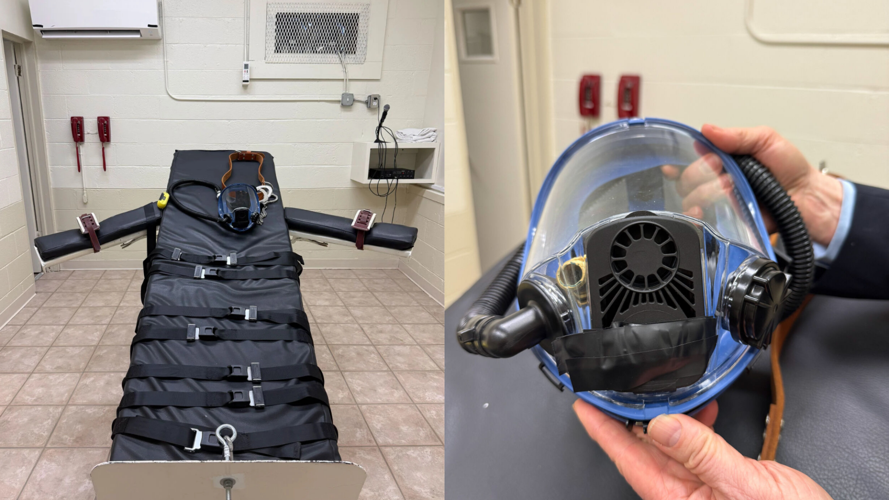
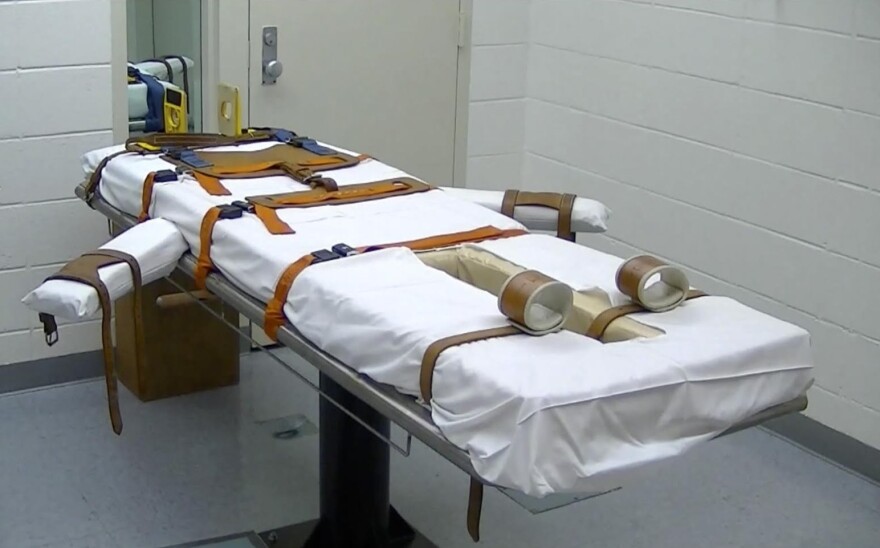
In about 8 hours, 4 big men, strong and barrel-chested – chosen for this task and having trained on it for hours and hours for several weeks – will enter through a barred gate, open a small cell door, and shackle and manacle a man. They will walk, or carry, him out the cell and through that gate, turn to their left and pass through two locked steel doors, pass through a lobby where hangs a large oil painting of a chariot aiming for the heavens, and through another steel door. They will pass a number of gathered officials, enter into a small windowless room where there is a gurney.
There is a pair of phones hanging on the wall, and a microphone. He will be placed on the gurney, given a moment to speak a few words. They will then fit a clear mask over his face, tightening the straps on his chin. There will be a silent, solemn nod, and the man on the gurney will be suffocated with nitrogen gas.
It is a torturous process, lasting about 5-6 minutes while he struggles to breathe, wrists and feet straining against the thick leather straps restraining his limbs to the gurney. When sufficient time has elapsed and there is no more movement from the man, a medical person will enter the room, place a stethoscope to his chest, listen closely, and pronounce him dead.
An ambulance will already be parked outside the back steel door, and he will be rolled out and placed in the vehicle. They will drive to the REBTC Treatment Center and his body will be placed into a steel refrigerated drawer marked “MORGUE”. HIS suffering will at last be over. The only suffering left will be of his friends, his loved ones, and the attorneys who have fought valiantly to save his life.
And, the “right-to-life” state where it is mandated that the Ten Commandments be placed in every school classroom – the Sixth Commandment, specifically – will have purposely murdered a man by taking the same gift of breath given to him by the very God that they so loudly proclaim to be their guide.
And those people who did this will go home and go to eat supper, have a couple drinks, and get a night’s rest.
Forgive us, because we should not be capable of doing this.
NOTE
NOTE: This post was originally posted on March 18, 2025, prior to Jessie’s execution by nitrogen gas. I just never had the opportunity to update all of the places my writing is available. You can find my writing on mySubstackor on my other website atFREEDOM-CHANNEL.
If you like my work, and appreciate it, please note that donations are greatly appreciated.
The execution gurney and a mask used for the nitrogen gas
Gerald Bordelonexpedited his own execution by choosing to waive his appeals, including his direct appeal, which was previously thought to be a mandatory part of the state’s death penalty process. Bordelon volunteered for execution after he was found guilty of raping and murdering his 12-year-old stepdaughter. The choice to waive his appeals was met with strong disagreement from his team of inmate counsels (prisoners who serve as attorney substitutes), who jointly decided that they would not assist him in his decision. Bordelon was represented in his desire to be executed by a fairly well-renowned constitutional law attorney from Baton Rouge, Jill Craft. She succeeded in having the court allow Bordelon to waive his appeals, but later said she “would never do it again. “
Bordelon told media sources why he volunteered for his execution: “I’m doing this for [the victim] Courtney. I’m doing it for her family. I’m doing it for me. I’m doing it for my family so they don’t have to worry and deal with it for the next 20 or 30 years. I’m doing it for a lot of reasons.”
On January 7, 2010, Gerald Bordelon was executed via lethal injection at Angola. He was one of three people executed in the United States on that same day. The others were Vernon Lamont Smith in Ohio and Kenneth Mosley in Texas. They were the first three people to be executed in the United States in 2010. The executions of three or more people within a single day is something that has not occurred in the United States since.
In Bordelon’s last statement, he apologized to LeBlanc’s family as well as his own. His last meal was fried sac-a-lait fish, topped with crawfish étouffée, a peanut butter and apple jelly sandwich, and chocolate chip cookies. He was pronounced dead at 6:32 pm.
As of this writing, Bordelon remains the last person executed in Louisiana, which has gone over fourteen years without an execution. He is also the only person to have been executed in Louisiana since 2002, when Leslie Dale Martin was executed for murder.
Due to a 2012 lawsuit challenging Louisiana’s lethal injection protocol and drug companies not wanting their products associated with capital punishment, Louisiana has been unable to carry out executions, despite capital punishment still being a legal penalty.
Despite remaining a legal penalty, there have been no executions in Louisiana since 2010, and no involuntary executions since 2002. Execution protocols are tied up in litigation due to a 2012 lawsuit challenging Louisiana’s lethal injection procedures. In addition, certain pharmaceutical companies and manufacturers do not want their products associated with capital punishment, meaning the state has been unable to obtain lethal injection drugs. Despite this, a 2018 survey by the Louisiana State University found that the majority of Louisiana citizens still support capital punishment.
On March 5, 2024, Governor Jeff Landry signed a law allowing executions to be carried out via nitrogen gas and electrocution. The law has opened the door for Louisiana to resume capital punishment after a fourteen-year hiatus.
No more is there a “liberal” decision on what is appropriate punishment or humane. So a new era is beginning in Louisiana, one of anger and hatred and – for lack of a better term – revenge, and simple political expediency. Landry campaigned on a promise to “get tough on crime,” even though crime had been on a steadily declining path for several years. The problem is that New Orleans has a fairly high profile and when anything happens there, it gets highly magnified. People ignored what was actually happening, a lot of people did not vote, and Landry won. Like Trump, Landry claims that a “mandate from the people” propelled him into office, when nothing could be further from the truth.
In the 2023 Louisiana gubernatorial election held on October 14, 2023, Jeff Landry secured the governorship by winning 51.56% of the vote, totaling 547,827 votes. His closest competitor, Democrat Shawn Wilson, received 25.93% of the vote, amounting to 275,525 votes.
Voter turnout for this election was notably low, with only about 36% of registered voters casting ballots—the lowest for a Louisiana gubernatorial primary since 2011. Given the state’s 2,970,167 registered voters, this means that approximately 18% of the total electorate voted for Landry.
While Landry achieved a majority in the primary, allowing him to avoid a runoff, the low voter turnout indicates that a significant portion of the electorate did not participate in the election. Therefore, his victory margin reflects both his support among active voters and the broader context of limited electoral engagement.
So, his election was hardly a “mandate,” but Louisiana’s largely conservative “Bible Belt” reputation strongly supports him. That fact is reflected in him holding a super-majority in both houses of government. He used this to great effect when, within days of taking office, he instituted a complete reversal of all criminal justice reform gains made during the terms of his predecessor, John Bel Edwards.
New methods of execution, legislation authorizing treatment of 17-year-olds as adults, elimination of parole for prisoners, and a vast reshaping of the entire criminal justice system were accomplished within weeks in “Special Sessions” of the legislature. He very publicly announced that he was creating a new State Police Troop to be based in New Orleans that would assist the notoriously corrupt NOPD in fighting crime in the city.
Within weeks, the new Troop was responsible for three separate car chases that resulted in four crashes. These incidents led to multiple arrests and the confiscation of various drugs and firearms. In at least one of those chases, an innocent bystander was injured.“
As far as the promised results, violent crime in New Orleans actually increased in the months ahead. Homicides increased, armed robberies increased, and a horrible homegrown terrorist attack occurred in New Orleans’ famed French Quarter, about a month shy of the city hosting the Super Bowl. Landry created a bit of a stir with his court-challenged uprooting of the city’s homeless population and placing them in an “emergency shelter,” and in the process destroying most of their personal property while promising to implement programs designed to get people off the streets and into residential housing.
So the Super Bowl came and went – and my Chiefs LOST! – and things pretty much returned to normal. Louisiana went right back to figuring out the quickest and best way to efficiently kill someone.
We are now less than a week from Jessie Hoffman’s execution date of March 18th, 2025. Although court challenges are in the works, it remains to be seen whether the date will be met, and what sense of pride Jeff Landry and Attorney General Liz Murrill will exhibit following the intentional killing of a man. Both Landry and Murrill have said that they are “honoring promises made to the victims and their families.” I think they are only creating more victims.
The federal district court in Baton Rouge, Middle District of Louisiana Judge Shelly Dick, has granted an injunction halting (or at the very least, slowing) the execution, and in the ruling, said,
CONCLUSION
Considering the foregoing, Plaintiff’s Motion to Reconsider the Court’s Denial of his RLUIPA Claim (Count VI) shall be DENIED. Plaintiff’s Motion for Preliminary Injunction shall be GRANTED on the Eighth Amendment claim, and Defendants are enjoined from executing Jessie Hoffman on March 18, 2025, using nitrogen hypoxia. Plaintiff’s Motion for Preliminary Injunction is DENIED as to Counts III and IV.
March
Baton Rouge, Louisiana, this 11th ___ day of _______________, 2025.
S
________________________________
SHELLY D. DICK
CHIEF DISTRICT JUDGE
MIDDLE DISTRICT OF LOUISIANA
I pray for Jessie Hoffman, as I hope you do as well. He has asked that he be executed via firing squad, due to the lack of prolonged suffering. He will simply be wiped out of existence, like some terrible substance on the bottom of Jeff Landry’s shoes and Liz Murrill’s heels, and not drowned with fluids filling his lungs and prolonged suffering. After all, isn’t this what you wanted, Louisiana? Oh, I see. You didn’t vote. Well, then you couldn’t care.
Sleep safe tonight, Jessie Hoffman.
NOTE: This post was originally posted on March 14, 2025, prior to Jessie’s execution by nitrogen gas. I just never had the opportunity to update all of the places my writing is available. You can find my writing on mySubstackor on my other website at MyLifeAfterPrison.
If you like my work, and appreciate it, please note that donations are greatly appreciated.