• Skip to primary navigation
  • Skip to main content

My Life After Prison

Resources for the incarcerated and their families.

  • Home
  • About
  • Contact Us
  • BREAKING NEWS !!
  • Florida
  • Louisiana
  • Show Search
Hide Search

Louisiana

The Desperate Client

William Kissinger · June 5, 2025 · Leave a Comment

Left At The Altar

The interview meeting was not my first. It was to my knowledge, however, the first of its’ kind. I had been an Inmate Counsel (“lawyer” in the jailhouse sense) for a fair number of years and had encountered many entirely new and different – some might go so far as to say “unique” – situations. The guy sitting across from my desk I had talked to a number of times when I made my morning rounds of the tiers on Death Row. Just never at length, never without bars separating us, and never in such a tense moment.

His wrists were wrapped with solid stainless steel handcuffs threaded through the notorious ‘black box’ and his feet were shackled to his chair. Two security officers had brought him into the Legal Aid Office and strapped him in and cautioned him; “Do NOT fuck up! Act like you’ve got some sense now.”

At the time, I was kind of a hero, as I had just a few years before beaten the Warden, Burl Cain, in a huge lawsuit wherein I was portrayed as the hero and he the villain. It was not much of a stretch to frame Cain as a villain – he was wildly popular with Louisiana’s legislature – his brother, James David Cain (R) from Pitkin, Louisiana, was a legislator for some 36 years – and was often caught up in mildly scandalous affairs and various goings-on. Burl testified that I “used bad words,” and deserved to be punished for saying them. All I had said (in a letter to the FDA requesting an investigation into a private enterprise on prison grounds) was that it was “shrouded in secrecy and stinks of impropriety”

So he locked me up in solitary, I was threatened with being “shot while attempting to escape,” and various other forms of not-so-pleasurable treatment. However, thanks to a friend who smuggled a letter detailing my experiences to a federal judge, a volunteer lawyer who fought tooth-and-nail on my behalf (Keith Nordyke), and favorable public opinion, I eventually prevailed in a federal lawsuit. Instant fame amongst the convicts, instant landfall monies, and an instant target on my back from several different quarters.

I had fought my assignment to Death Row for some time. Burl Cain had summoned me to the A-Building late one night and asked me to take on the role. He explained why I was the perfect candidate for the job. I demurred with the best initial answer I could come up with at the moment – “Warden, how do you expect me to go in at night and lay my head down on that pillow and sleep, not knowing if I had correctly and effectively done everything possible to save that man’s life knowing that next week or the week after you’ll be the one to kill him?! I can’t do that.”

Well, as Wardens will do, he let me go with that, and then a week later Colonel Sam Smith called me in to an Internal Review Board and basically told me I had better take the assignment or…else. He said (off the taped record, of course) he had received instructions from Burl Cain. I abandoned my clients on the Civil Litigation Team and I accepted the assignment.

I had settled in fairly well and grown to learn most of my clients – all condemned to die by lethal injection – and become familiar with most of them and their needs. I had Shepardized cases for them, fetched and delivered law books to them, drafted motions on their behalf, filed public records requests for them, obtained DNA tests and located “lost” evidence in police files for them, and advocated with everybody on earth I could think of on their behalf.

This, however, was a beast of a different stripe. When I made morning rounds on the Tiers, Kevin S. had stopped me and thrust a piece of paper in my face. Shaking from fear or anger or worry or some emotion, he said, “Man, these mother-fuckers trying to kill me and I ain’t even got a lawyer!” Well, this wasn’t right or…was it? I mean, everybody on Death Row has lawyers, don’t they? Don’t they?

It was very simple – it was an Order from the 19th Judicial District Court in Baton Rouge (the state’s capital) setting his date of execution. The date that the State of Louisiana would calmly, methodically and purposefully kill him had been set.

But, to my way of thinking, it hadn’t been set in stone. And that’s the only thing that counts. You see, when a convict (especially an Inmate Counsel) thinks there’s a way to get past something, he’s going to find it. Now, it might be around it, over it, under it, or through it…but he’s going to find it.

So, after getting past my initial uneasiness at the way the meeting had started out, we got into the details. Kevin S. – a tall, heavily built and very dark Black man – had been convicted of the July 30, 1991, 1st Degree Murder of one Kenny Ray Cooper, a young guy working at a Church’s Fried Chicken. As he continued with the story, my skepticism began to wane. He told me that it was NOT an armed robbery, as the DA had presented it to the jury. It was actually a case of self-defense.

Louisiana defined 1st Degree Murder (Louisiana Revised Statute R.S. 14.30) at the time as:

“The killing of a human being:

(1) When the offender has specific intent to kill or to inflict great bodily harm and is engaged in the perpetration or attempted perpetration of certain listed felonies (e.g., aggravated kidnapping, rape, robbery, arson, burglary, assault, etc.),

OR

(2) When the offender has specific intent to kill or inflict great bodily harm and meets other aggravating factors.”

As Kevin unraveled the story to me, Kenny owed him money from a previous drug deal, and he had gone to collect after several failed attempts. An argument ensued, and Kenny pulled a gun and Kevin pulled his and they exchanged shots. Kenny died – Kevin survived. Now, Kevin was awaiting the horror of being killed by Louisiana for defending himself.

Before I go further into the story and my reliving of the moment, let me tell you a few things about Louisiana’s death penalty and its’ prosecution and application in Louisiana. Louisiana is inherently a racist state, and always has been. It has a rich and vibrant history of horrific racism. Even today, Louisiana’s justice system fights to maintain Jim Crow-era laws that are responsible for the mass incarceration crisis in the state, and which even now, threatens to dominate the nation in the numbers of prisoners stuck behind bars for the remainder of their natural lives.

When I was in Angola prison (where I served 47 flat calendar years), at one point I was fortunate enough to meet the artist Debra Luster, while she was working on her beautiful exhibit One Big Self: Prisoners of Louisiana. As a wooden bowl maker and erstwhile craftsman, I participated in her project. This was only one of the myriad of experiences where I began to realize that Louisiana had a serious problem with racism and mass incarceration.

However, as I sat across the desk from Kevin on that day, these were all thoughts far from my mind. I was focused on one thing and one thing only: saving his life from being murdered by the State of Louisiana. It really made no difference to me whether Kevin was truly guilty or truly innocent – at moments such as this, innocence is never the point – the point is taking the next in a series of breaths.

Now, I believe I had told you that Kevin said to me, “…trying to kill me and I ain’t even got a lawyer!” Well, that wasn’t entirely correct, Turns out that he did indeed have attorneys appearing on his behalf. They just weren’t there. Turns out there was a big fancy wedding taking place in England, and his attorney was doing the most vitally important task of attending the wedding. Hmmm…balancing the scales between attending a wedding and getting a stay on Kevin’s case….I believe I would have chosen the latter. But, I digress….

I called Ms. Dora Rabalais, (Director of Legal Programs at Angola for 26 years) and explained the situation to her. At that point in time, we had a pretty good relationship because (secretly) she had admired my first battle with Warden Burl Cain, (wherein I wrote the now-famous “shrouded in secrecy” letter). At the conclusion of my case in Federal District Court, she had told me that I had brought credibility and strength back to the program. So, today, she was willing to help in this seemingly urgent matter.

She called the Death Row Warden who was in charge of both CCR (Close Cell Restriction) and Death Row, and I have no clue as to how the conversation went. I do know that it was only about an hour later that one of the post officers came to my office and told me that they would be bringing Kevin to the office in about thirty minutes. So, that’s how we came to be sitting across from each other, how I heard his story, and how the first-of-its-kind meeting was arranged, and how the next events took place.

Kevin and I talked for at least an hour or two and I told him what we would do. I would file for a Stay of Execution and go from there. I prepared it (my first one in such a critical matter!) using a Louisiana Formulary, and had it carried to Ms. Dora’s office where she faxed it to the court. As expected, a few hours later it was DENIED. I had already prepared an appeal of the denial and sent that back to Ms. Dora, where it was faxed to the Louisiana State Supreme Court. Baby stuff, right?

Maybe ‘baby stuff’, but for me, for Kevin, for everybody, it was huge. In times of clear pressure, Legal Programs was thriving and delivering on the promise of effective assistance of counsel substitutes to all inmates.

Under her leadership, Angola’s legal programs became a model for other states. States like Florida, Mississippi, and Texas adopted similar programs to enhance legal assistance for inmates without the need to hire additional attorneys.

Kevin eventually received his stay order. That night, if no other, I could lay my head down and rest knowing that I had done everything I could to help Kevin, and that it would not be the next week that Louisiana would kill him.

We had several more interactions over the next year or so, and I continued my work for Death Row, Treatment Center, and Infirmary Center inmate clients. Years later, I looked up one day in the chow line and Kevin was standing there – free from the promise of death. He had been re-sentenced and now had a LWOP (life without parole) sentence.

Sadly, though, my battles with Burl would resume some time later. We would get into a war over my accusations of financial impropriety and he would again send me to another institution. It was a harrowing experience to endure for what I felt was – again -doing the right thing. Ultimately, I prevailed again,

I have now been free for 781 days. I just turned 72. I’m living my best life. I hope you are too!
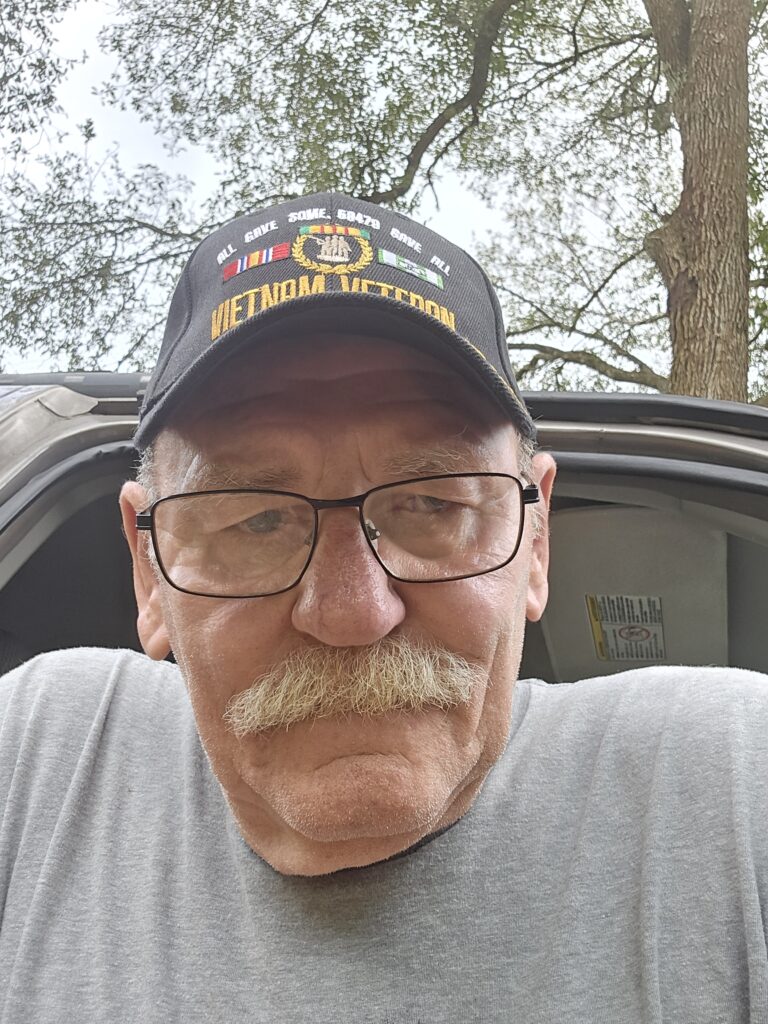
The Author – Bill Kissinger

Donate NOW To My Life After Prison – FREEDOM CHANNEL

OR

BUY ME A COFFEE !!

Thank you! Be sure to check my Substack column at

Unraveling (IN)Justice – Part III

William Kissinger · May 9, 2025 · Leave a Comment

Willing Ears – Eager Lips…..And A Widening Divide

Jimmie Duncan with his girlfriend, Zoe, on a Visit at Angola’s Death Row

This is Part 3 of my series of articles on the 32-year journey of Jimmie Christian Duncan to prove his innocence from the confines of a Death Row cell in Louisiana’s Angola State Penitentiary. What got him there is a sordid tale – one of dirty Louisiana (in)justice, two now-discredited doctors, a jailhouse informant (read as “snitch”), and an attorney who decidedly did not provide effective assistance of counsel at trial. Oh, yeah…and throw in there a little bit of good ole’ Louisiana backwoods politics and a courtroom full of people who just would not listen….


I’ve talked about Jimmie a lot lately, and told you of how I know him well. I even told you that I used to sell him tacos, burritos, and cheeseburgers from the inmate club I was the founding president of, the Camp F VETS. I used to stop and talk to him if he was awake in the mornings when I picked up deli orders, or in the evenings when I delivered food, or on Tuesdays when I delivered fruit for indigent prisoners.

Jimmie was one of the guys I enjoyed stopping and chatting with a bit. He was one I just knew was in there bad, knew he was truly innocent of the horrible crime he was charged with – murder and sexual abuse of an infant. But the leap to that charge was fraught with corruption and lies from 2 doctors with extremely shaky backgrounds and a well-documented history of wrongful convictions – basically “hired guns” up for purchase by willing ears – and between cops and judges, there were plenty of those.

Jimmie was initially arrested and charged with negligent homicide. Under police interrogation, Duncan was inconsolable. Sobbing, he told the police, “I jerked her out of the bathtub and tried to get her to breathe, and I couldn’t. I tried to blow her air. I tried pushing on her little tummy.” When the officers concluded their interview with Duncan and asked if he wanted to add anything to his statement, he cried out, “I just want to bring the baby back.”

The West Monroe Police Department charged Duncan with negligent homicide, alleging that his carelessness and inattention led to the toddler’s death. After doctors examined Haley’s rectum and suspected possible abuse, they sent her body to Jackson, Mississippi, to be examined by Dr. Steven Hayne, a pathologist, and his colleague Dr. Michael West, a dentist. Their findings changed everything.

West identified tooth marks on Haley’s body, and Hayne stated that he found overwhelming evidence that she was the victim of a violent sexual assault. Based on those determinations, prosecutors concluded that Duncan had bitten Haley repeatedly, anally raped her, and forcibly drowned her to cover up his crimes. Prosecutors upgraded the charges to first-degree murder.

Louisiana had its own medical examiners at the time who were closer to the scene of the crime. Nonetheless, Haley Oliveaux’s body was taken from Glenwood Regional Medical Center in West Monroe, Louisiana, 120 miles east to Jackson, Mississippi, so it could be autopsied by Hayne. At the time, Hayne, who has never been certified in forensic pathology, was performing the majority of autopsies in Mississippi, some 1,200-1,500 per year. That’s an output other forensic pathologists describe as impossible (he was also holding down two hospital jobs and testifying regularly in court).

Duncan maintained his innocence from the beginning, but in 1998 a Ouachita Parish jury convicted him of capital murder and sentenced him to death. He was sent to death row at the Louisiana State Penitentiary, where he has remained ever since, spending three decades awaiting execution and fighting to prove his innocence.

So…in spite of the local medical examiners who were highly qualified to conduct legitimate autopsies wherein violence was suspected, why was Haley sent to Mississippi for an autopsy?

Among those who traveled the 120 miles to observe Hayne’s work were the West Monroe police chief, a police detective and captain, and two assistant district attorneys. Although it isn’t particularly uncommon for prosecutors or police to witness an autopsy, it is unusual for them to farm them out and travel two hours and cross state lines to do so.

“Every prosecutor in Mississippi knows that if you don’t like the results you got from an autopsy, you can always take the body to Dr. Hayne.”
Leroy Riddick, Alabama medical examiner.

Simple answer? Because Hayne was a hired gun, and he and his partner, Dr. West, were for sale. And that was precisely what the Ouachita Parish cops needed, a willing accomplice. They got two. And as talk swirled in West Monroe – as things tend to do when something horrible happens in small, rural Southern towns – a light bulb flickered above somebody’s head, and began to blink on and off until it glowed brightly. That person was Michael Cruse.

The other major piece of evidence against Duncan was testimony from a jailhouse informant who claimed that Duncan confessed to his crime while behind bars. Michael Cruse testified that he shared a jail cell with Duncan for one day in late December 1993. (Cruse also claimed another inmate in the same cell confessed a felony to him, according to the letter he wrote to prosecutors.)

Duncan’s current attorneys have since obtained an affidavit from Michael Lucas, another inmate in the cell that day, who says that not only did Duncan not confess, he repeatedly asserted his innocence, despite Cruse’s constant attempts to elicit a confession.

Since then, two other inmates have reported being asked by Ouachita Parish law enforcement officials to lie about hearing Duncan confess. One of them, Charles Parker, who had worked as an informant for the FBI, wrote a letter of complaint to the district attorney’s office about the incident. In a later interview with Duncan’s post-conviction attorneys, he described how an investigator named Jay Via approached him and fed him information about Duncan’s case.

“He gave me details of the crime, saying that the child was less than two years [old] and that she had been anally raped,” Parker said “He told me that when I came forward I was to say that Jimmie had confessed to biting the child while he was raping her.”

Parker said that in exchange for his testimony, Via promised “he would talk to the DA and would get my sentence reduced.” Parker said he refused, because he thought Duncan was being railroaded. Via then allegedly threatened him with repercussions.

The prosecution not only never followed up on Parker’s initial letter, they never turned it over to Duncan’s trial attorneys—yet another violation of their legal requirement to share exculpatory evidence. The letter wasn’t discovered until Duncan’s post-conviction attorneys found it in the district attorney’s case file.

Police notes taken during an interview with the informant Cruse say that he asked for “ammunity [sic] from prosecution.” Cruse’s own letter offering to testify also mentioned his desire for leniency with respect to a burglary charge he was facing. Neither of those documents were turned over to Duncan’s trial attorneys either. By the time of Duncan’s trial, Cruse was facing a new charge of theft. That charge was dropped a month after he testified.

Inspector Via has a history of eliciting false confessions. In 1983 a man named Barry Beach was arrested in Ouachita Parish for contributing to the delinquency of a minor. After three days of intense questioning, he confessed to Via that he had killed three women in Louisiana and one in Montana. Beach’s lawyers were later able to prove Beach couldn’t have committed the three murders in Louisiana, because he wasn’t even in the state at the time. Beach still stands convicted of the fourth murder, which took place in Montana, though there are mounting questions about that one too.

Incredibly, Via then managed to elicit two more false confessions to one of those same murders. Months after the Beach confession, Via got convicted felons Henry Lee Lucas and Ottis Toole to confess to one of the murders Beach didn’t commit. Just last year, a fourth man named Anthony Wilson was arrested for that murder after DNA tests linked him to the crime scene.

The state’s most telling witness was Michael Cruse, an inmate who on December 28, 1993, briefly shared a cell with defendant.   That day, Cruse testified that he woke to find defendant “ranting and raving about [his] charge.”   Cruse told defendant “[I]f you are innocent then justice will prevail but if you are guilty then you need to talk to God․” Defendant then began sobbing and made rambling  statements to Cruse, telling him that “the baby was pointing at his penis and that he said something about a bottle or bobble.”

Further, defendant said “[t]hat it must of been the devil in him cause the next thing he knew he blacked out again and when he came to he was trying to have sex with the baby.”   Still further, defendant said that the baby was hysterical and that “all I wanted was the baby to stop.”

Now, do you remember the whispered conversations when you were in school and somebody “tattled?” Finger pointing…cat-calling, name-calling, ostracizing? The tattler was no longer one of the “cool kids,” not with the “in crowd,” not invited to eat lunch with you? Remember that? Well, that’s pretty much how it is in adult life as well. NOBODY likes a snitch. Especially a rewarded snitch. There’s a saying on the streets and in the penitentiary: “Snitches get stitches.”

Well, well, well… look who crawled out from the bottom of the prosecutor’s filing cabinet. Turns out the star witness wasn’t missing—just strategically misfiled under ‘C’ for ‘Can’t Believe This Guy.’ Who knew justice came with footnotes… and secret snitches? Louisiana did, that’s who.

In State v. Jimmie Christian Duncan, Duncan’s incredible team only discovered – long after trial – a confidential informant, Michael Cruse, whose true motivation was buried so deep in their files that archaeologists were nearly called in. Filed somewhere between a gumbo recipe and a ‘Misc: Definitely Not Brady’ folder, this witness—who has given a full recantation 32 years after trial—was, defense counsel noted, quietly doing laps in the prosecutor’s memory since the mid-’90s.

Not only did Cruse recant his statements, but Charles Parker (who was, as noted earlier) a trusted confidential informant for the FBI, had written a letter of complaint to the District Attorney about what Cruse was doing. This letter was also kept from trial attorneys.

So, perhaps the most damaging elements in Duncan’s trial were the snitch, Michael Cruse, and the crooked cop, Jay Via, and the willing ears of a hungry prosecutor’s compelling urge for a headline-grabbing conviction.


Next, in Part IV, we’ll take a look at how this all tied together, and how (IN)Justice works in Louisiana. Thank you for staying with me on this journey through the underbelly of the South. See ya’ soon!

Unraveling (IN)Justice – Part II

William Kissinger · May 5, 2025 · Leave a Comment

Willing Ears – And A Wide Divide

Jimmie Duncan On The Row At A Visit

Recall the two “experts,” Michael West and Steven Hayne. As I explained before, Jimmie’s case has become a hot gathering spot for wrongful conviction advocates primarily because of its connection to two of the most well-known names in forensic misconduct.

These discredited forensic figures have been linked to many wrongful convictions, many of which have been overturned, and of the overturned, 4 are death row veterans. Yet, in spite of mounting evidence that Duncan was convicted based on junk science, Louisiana continued to push onward with the tortuous path towards his execution.

Michael West first: the evidence analysis provided by Dr. Michael West, a so-called “bite mark expert,” has led to the wrongful conviction of almost a dozen people.

I chose one particular case of Dr. West’s to highlight out of the myriad of cases where he sold his soul and honed his craft. He operated his own little cottage industry where he delivered on demand the testimony most desired by prosecutors: something to tie the case together and point the finger directly at the defendant However, his aim was often way off target.

Dr. West’s bite mark testimony directly contributed to the murder convictions of Levon Brooks and Kennedy Brewer. Brooks and Brewer were accused of killing two young girls in the early 1990’s, and while there wasn’t much evidence tying either man to the crime, West concluded that the bite marks seen on the two girls came from Brooks and Brewer, respectively.

As Oxygen reports, West even went so far as to say that the marks seen on one of the victims were “indeed and without a doubt inflected [sic] by Kennedy Brewer.”

….

He had even been discredited before Brewer’s trial, the first member ever to be suspended from the American Board of Forensic Odontology.


Levon Brooks: Levon Brooks spent 16 years in prison for the rape and murder of a three-year-old girl that he did not commit. Forensic dentist Dr. Michael West claimed that the marks on the victim’s body were human bite marks and he testified at Brooks’ trial that, of 13 suspects whose dentitions he had compared to the wounds on the victim’s body, Brooks’ teeth “matched” the marks on the victim. As he explained, “it could be no one but Levon Brooks that bit this girl’s arm.“

Based on this testimony, Brooks was convicted of capital murder and sentenced to life in prison. In 2001, DNA testing and a subsequent confession revealed that Justin Albert Johnson committed the murder. Johnson had been one of the 12 other suspects whose dental impressions Dr. West had determined did not match the bite marks on the victim’s body. Following Johnson’s confession, Brooks was freed on February 15, 2008.

Their exonerations in 2008 marked the first high-profile cases in which the testimonies of Hayne and West were found by the courts to be riddled with errors and, in some instances, completely fabricated.


Remember that In Jimmie’s case, he has ALWAYS proclaimed his innocence – from arrest to arraignment to trial to conviction and on through appeals to post-conviction relief applications – he has never wavered, and his story has never wavered. In the face of death, he has remained steadfast in declaring his innocence. It seems that the only way that the prosecutors could come up with a theory of the case that they could then sell to a jury, was to do a little buying of their own. So they bought three separate things that jurors would eat up: the physical “evidence” testimony of Dr. West, pathologist Dr. Steven Hayne, whose longtime partnership as state experts fell under legal scrutiny after questions emerged about the validity of their techniques.and the testimony of Michael Cluse (whom we’ll see in greater detail in Part 3), a rewarded jailhouse informant (snitch).

Now, Michael Hayne: At the time of Haley’s death, Hayne and West dominated the autopsy business in Mississippi and were making inroads into Louisiana’s “industry of courtroom experts.” Hayne could flip an autopsy around quickly, and unsurprisingly his findings nearly always supported whatever the working theory of law enforcement was, implicating their primary suspect in whatever crime they were investigating.

Hayne had found an ideal and perfectly willing partner in West, one of the leading “experts” in forensic bite mark analysis, a relatively newcomer science whose main claim to fame was to be able to match bite marks on a victim with the teeth of the suspected biter.

On multiple occasions, Hayne claimed to be performing up to 90% of all autopsies completed in Mississippi and bragged that he completed around 1,500 procedures in a single year. If true, that would far exceed what the annual maximum of 250 set by the National Association of Medical Examiners would equal. When pathologists surpass that number, they risk engaging in shortcuts and making mistakes, according to the organization.

Evidently, he also performed the impossible: in one case, he testified that he removed a victim’s spleen when it had, in fact, already been removed long before the man’s death. In another, he testified that he found in a female child a fully formed prostate gland, an organ that does not even exist in young girls.

Hayne, who died in 2020, had a long and well-documented history of errors and straight-out lies. There have been numerous news reports, court records and even books written about this partnership in the years after Duncan’s conviction.

So, as I said above, they had formed the perfect little cottage industry – reliable and seemingly credible testimony that would favor the state and deliver the desired result – a conviction and sentence.

Years after Haley’s death, Duncan’s post-conviction attorneys uncovered evidence that was not presented at trial that tends to prove his innocence. This includes:

  • a jailhouse informant who wrote to prosecutors offering to share Duncan’s confession to the crime in what the defense claims was an exchange for leniency (the informant later recanted his trial testimony); (covered in detail in the next part of this series)
  • past head injuries Haley (who had experienced seizures) suffered that might explain her death;
  • and a video in which West can be seen grinding a cast of Duncan’s teeth into Haley’s body.

“Cottage industry.” The term make you envision a cozy little gleaming kitchen with red-and-white plaid tablecloths, shiny ovens and the smell of artisan bread baking? No, this is a cold, not-quite sterile room with slide-out drawers, stainless steel tables and windowless walls – and the potential for raking in tens of thousands from willing and eager cops, top cops and frantic prosecutors searching for willing partners in stirring up a pot of criminal (in)justice stew.

They (West and Hayne) were essentially “hired guns,” willing and quite capable of putting on a very convincing show routine in any courtroom and sell any jury.

The amazing thing is that Haley’s autopsy occurred years after there were significant questions raised about West’s and Hayne’s methods and qualifications., as well as results. The wide divide here is the gap between West and Hayne growing and crumbling.

Hayne’s reputation had also been unraveling over the years. A Louisiana judge on the 5th U.S. Circuit Court of Appeals described Hayne as the “now discredited Mississippi coroner” who “lied about his qualifications as an expert and thus gave unreliable testimony about the cause of death” in a 2014 opinion about a different murder case.

“West has routinely collaborated with Steven Hayne, a medical examiner for hire who conducts nearly every autopsy for prosecutors in Mississippi – even though he flunked his board certification. He nets nearly $1 million a year from conducting autopsies across the state, and West helped set up the system that allows Hayne to handle so many autopsies (each year, Haynes conducts six times more autopsies than the recommended standard). Hayne conducted the autopsies on the victims in the Brewer and Brooks cases – and called West in for both autopsies. At Brewer’s trial, full video footage of the victim’s autopsy was deemed inadmissible in court because it was so offensive and inappropriate; throughout the autopsy of the raped and murdered three-year-old girl, Haynes listened to loud music, so the trial judge ruled that the sound from the video could not be played in court. West held the video camera during that autopsy.” The Innocence Project

Just a booming business, right? And a business that Louisiana is heavily invested in. It is NOT the business of truth – rather, the business of fabrication, corruption and eager ears…


Follow along for the next part of this series, and we’ll take a look at how a jailhouse informant helped place Jimmie Duncan in a 6’x9’ death row cell for over three decades.

How An (IN)Justice Comes Unraveled

William Kissinger · May 5, 2025 · Leave a Comment

This is the first in a series of articles revolving around the case of Louisiana vs. Jimmie Christian Duncan. I say it’s a series because as of right now the case is still ongoing and there is no clear end in sight. For him, it may never end. As things develop and the situation progresses, I will provide updates.

Jimmie Duncan is on death row in Louisiana for a crime that many experts – and also quite ordinary people as well – say may never have even happened. He has been there for almost 32 years. I know him well. In fact, I used to sell him tacos, burritos, and cheeseburgers from the inmate club I was the founding president of, the Camp F VETS. I used to stop and talk to him if he was awake in the mornings when I picked up deli orders, or in the evenings when I delivered food, or on Tuesdays when I delivered fruit for indigent prisoners.

His case has become a gathering spot for wrongful conviction advocates primarily because of its connection to two of the most well-known names in forensic misconduct: Michael West and Steven Hayne. These discredited forensic figures have been linked to many wrongful convictions, many of which have been overturned, and of the overturned, 4 are death row veterans. Yet, in spite of mounting evidence that Duncan was convicted based on junk science, Louisiana continued to push onward with the tortuous path towards his execution.

Maybe it was because Louisiana wanted to conceal something – the falsehoods and junk science they were perpetuating, and the jailhouse informant they relied on – even after they knew he was lying to them. So, yes….this case is about 3 primary things: manufactured “evidence,” lying witnesses, and jailhouse snitches. This is actually a pretty common tactic in Louisiana – hiding evidence and coaching lying informants. And once caught, prosecutors and judges – and informants – have no choice: they have to keep lying and hiding.

Jimmie has ALWAYS proclaimed his innocence – from arrest to arraignment to trial to conviction and on through appeals to post-conviction relief applications – he has never wavered, and his story has never wavered. In the face of death, he has remained steadfast in declaring his innocence.

However, with the election of Jeff Landry to the governorship of Louisiana (he was attorney general under Jon Bel Edwards) and the ascendancy to attorney general of Liz Murrill, his situation became much more tenuous. In the waning months of his final term, in a move that shook Louisiana politics, John Bel Edwards, the former Governor of Louisiana, expressed his opposition to the death penalty, stating it was “so final” and “we know mistakes have been made”. He based his opposition on his religious faith and the “finality” of the punishment. Edwards also directed the Board of Pardons to consider clemency applications for all death row inmates in Louisiana, advocating for a “pro-life” approach.

Full of hope, capital appellate attorneys filed mass requests for clemency for the 56 men on death row in hopes that Edwards could commute their sentences before leaving office. Guess who stymied that effort? You’re right – Jeff Landry. Landry promptly filed legal pleadings to stop this effort, and the battle played out in court.

Although Duncan was included in the initial filing for clemency, The Innocence Project withdrew its clemency petition in the case of Jimmie Duncan. “The State has shown it is not taking the process of reviewing death row clemency petitions seriously, and Mr. Duncan has new, compelling evidence of innocence that must be considered.”

Ultimately, the Louisiana Board of Pardons and Parole only heard five cases, and denied them all.

In spite of the “we know mistakes have been made” part of John Bel’s position, (since 1975, 12 individuals have been exonerated while residing on Louisiana’s death row), upon assuming office, Landry immediately announced a resumption of executions and Murrill jumped on and started rowing the boat. The legislature had hurriedly passed a series of bills which completely unraveled all of the positive changes to Louisiana’’s criminal justice system which had been brought about in a bi-partisan effort during Edward’s final term.

“Louisiana has a long record of convicting and sentencing to death people later found to be innocent. In the past three decades, the state has exonerated 11 people facing execution, among the highest such numbers in the country, according to The National Registry of Exonerations.”

On April 24, 2025, Jimmie’s death sentence and conviction were vacated by a Louisiana Judge and the evidence presented during evidentiary hearings in reaching that decision is appalling.

One footnote, in particular, I’m calling the “Wide Divide Note.” On page 7, of the court’s ruling vacating the conviction, there is a very apt descriptor of this entire case.

The “wide divide” throughout Jimmie Duncan’s entire 3 decades of death row has been widening since the day of his arrest. Until NOW. Now that the courts have not just rubber-stamped each and every denial, now that they have actually unfolded, pulled out, and examined the claims he presented, has this evidence been brought to light. And…there is more to come out.

Thanks to The Innocence Project, Jimmie’s extremely dedicated and talented legal team, and to various media highlighting the case, Jimmie now gets a chance to live – whether Landry wants him to or not. This rush to judgment is typical of what we see in high-profile capital cases, particularly in Louisiana. Once mistakes are made, it becomes even more critical to hide them. And Louisiana is very good at concealment.

Special shout out to Catherine Legge, multi-talented documentarian and producer extraordinaire, for her podcast and upcoming documentary, The Murder That Never Happened, in which the entire saga of Jimmie Duncan and his family and their battle to prove his innocence, is shown.

Next part of this story is coming soon!

Today’s The Day … For Jessie

William Kissinger · March 29, 2025 · Leave a Comment

Execution Day Protocol…

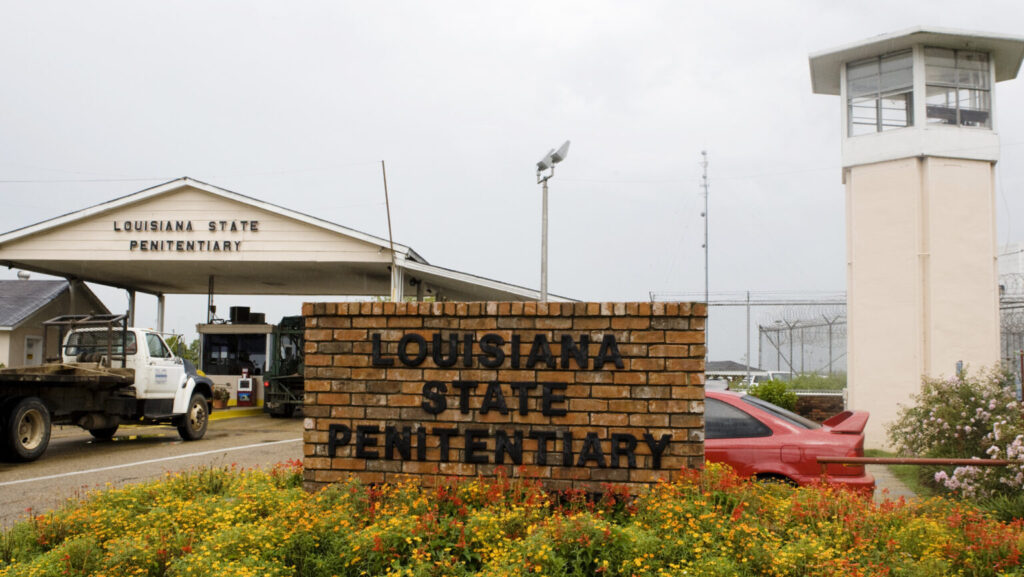
FILE – Vehicles enter at the main security gate at the Louisiana State Penitentiary — the Angola Prison, the largest high-security prison in the country in Angola, La., Aug. 5, 2008. (AP Photo/Judi Bottoni, File)

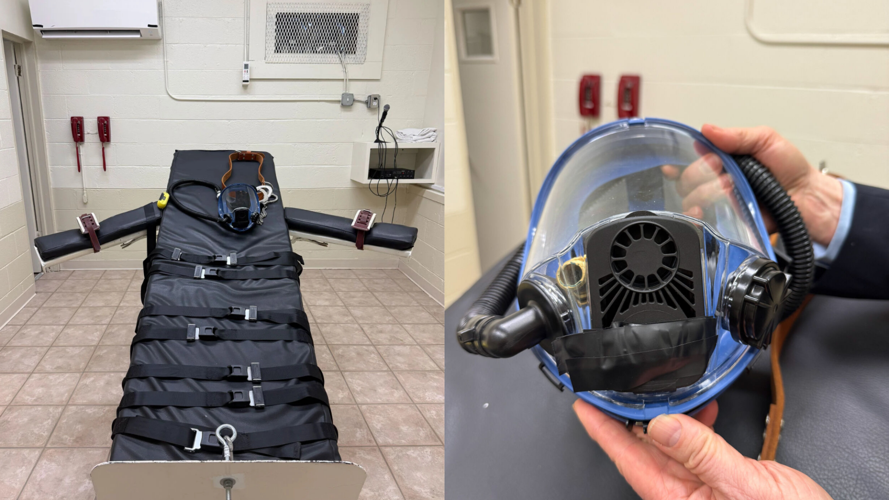
In about 8 hours, 4 big men, strong and barrel-chested – chosen for this task and having trained on it for hours and hours for several weeks – will enter through a barred gate, open a small cell door, and shackle and manacle a man. They will walk, or carry, him out the cell and through that gate, turn to their left and pass through two locked steel doors, pass through a lobby where hangs a large oil painting of a chariot aiming for the heavens, and through another steel door. They will pass a number of gathered officials, enter into a small windowless room where there is a gurney.

There is a pair of phones hanging on the wall, and a microphone. He will be placed on the gurney, given a moment to speak a few words. They will then fit a clear mask over his face, tightening the straps on his chin. There will be a silent, solemn nod, and the man on the gurney will be suffocated with nitrogen gas.

It is a torturous process, lasting about 5-6 minutes while he struggles to breathe, wrists and feet straining against the thick leather straps restraining his limbs to the gurney. When sufficient time has elapsed and there is no more movement from the man, a medical person will enter the room, place a stethoscope to his chest, listen closely, and pronounce him dead.

An ambulance will already be parked outside the back steel door, and he will be rolled out and placed in the vehicle. They will drive to the REBTC Treatment Center and his body will be placed into a steel refrigerated drawer marked “MORGUE”. HIS suffering will at last be over. The only suffering left will be of his friends, his loved ones, and the attorneys who have fought valiantly to save his life.

And, the “right-to-life” state where it is mandated that the Ten Commandments be placed in every school classroom – the Sixth Commandment, specifically – will have purposely murdered a man by taking the same gift of breath given to him by the very God that they so loudly proclaim to be their guide.

And those people who did this will go home and go to eat supper, have a couple drinks, and get a night’s rest.

Forgive us, because we should not be capable of doing this.

NOTE

NOTE: This post was originally posted on March 18, 2025, prior to Jessie’s execution by nitrogen gas. I just never had the opportunity to update all of the places my writing is available. You can find my writing on my Substack or on my other website at FREEDOM-CHANNEL.

If you like my work, and appreciate it, please note that donations are greatly appreciated.

  • « Go to Previous Page
  • Page 1
  • Page 2
  • Page 3
  • Page 4
  • Go to Next Page »

My Life After Prison

Copyright © 2026 · Website provided by Boomajoom