
A Year Of Hardship – And Shared Suffering
NOTE: Most people think of Hurricane Katrina and have images of people stranded on rooftops, crowds of people in the Superdome, helicopters flying overhead with lift-stretchers dangling below, or boats flying down city streets. Katrina upended a LOT of lives, but very few people stop to wonder what it was like in Angola State Prison or Orleans Parish Prison. In this short series of articles, I’ll tell you.
Things went south while we were asleep. Mother Nature was savagely angry with New Orleans and Angola and was showing her wrath, while we were still asleep. We woke to the shrill blaring of whistles, nightsticks banging on metal locker boxes and strident screams from correctional officers.
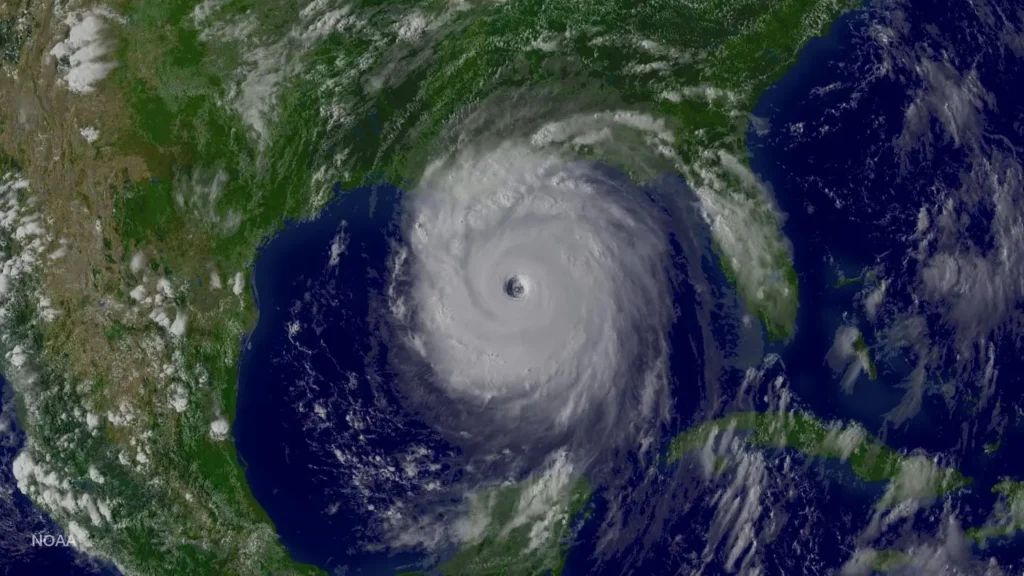
Robert H. “Bubba” Butler, longtime Angola employee who had risen to command of Camp F and Death Row was standing at the head of the dorm, face red and usual cigar in his mouth. Camp F was the prison’s Trusty Camp, and we were about 430 prisoners of varying age, race, ability and temperament. Every one of us averaged 20-30 years served on LWOP (Life Without Parole) sentences. In other words, we were at home. “Here,” for me, was Camp F Dorm 3-Lower, a forty-man dorm, the first floor of a 2-story building that at one time served as a BOQ (Bachelor Officer Quarters) for free people. It was considered to be a plum assignment, even for trusties. Living there could only be approved by the warden.
“Allright! You’ve got about 30 minutes here!” Bubba’s booming voice, amplified with his raspy speech and cigar-laced depth, echoed out across the dormitory.
“Get up and get your shit together. You can carry ONE pillow case with you because we don’t know when you’ll get your property. Take anything you need and put it in that pillow case. Everything else, pack it up and put it in your locker boxes, and roll your mattresses up and put any loose stuff in that. We’ll have somebody come pick all that stuff up later and get it to you when we can. It’ll ALL be out of here by the night. Now, get moving!” And, he was gone just like that. The rest of the pushing and orders came from the sergeants
And THAT is how we learned that Hurricane Katrina was getting ready to devastate Louisiana and upend our – and thousands of others’ – lives for over a year. Angola was really no stanger to hurricanes or “massive storms,” as the media refers to them. We had heard the day before that Katrina was strengthening and growing but had no idea what was to come. It was to us an unreal concept that we could be completely uprooted from our lives, that we could lose our home, that virtually everything would change. I mean, we were in the penitentiary, for God’s sake! COs were always spouting out that they were there to “protect us” and to “protect the community from us.” Weren’t we supposed to be protected, and didn’t that include from Mother Nature and her wrath?
Evidently not. There were some serious failures on the part of correctional officers all around the state on that day and ensuing days, most notably in New Orleans which was much closer to the coast than Angola. We had some hours before the full fury of the storm hit us. In the meantime tragedy and disaster along with major failure was happening in New Orleans.
As Hurricane Katrina began pounding New Orleans, the sheriff’s department abandoned hundreds of inmates imprisoned in the city’s jail, Human Rights Watch said today.
“Of all the nightmares during Hurricane Katrina, this must be one of the worst,” said Corinne Carey, researcher from Human Rights Watch. “Prisoners were abandoned in their cells without food or water for days as floodwaters rose toward the ceiling.”
By (the scheduled) lunchtime, we found ourselves dropped off from the backs of flatbed trailers and buses and herded into the 75-year-old Gym, which once served as the Chow Hall for the entire Main Prison. The free people were in full-on panic mode; as for us, we were confused as hell, worried and somewhat panicked over the loss of all of our property, our goods, all our important memories and things we held dear. Our hobbycraft tools and materials – and this was very important. Many of us lived on what we produced in the hobby shops – in our spare time, we spent many hours in the shops producing arts and crafts that we sold at the semi-annual Rodeo. What about our tools and raw materials that we had spent the months since April working with? What would happen to this? How would we support ourselves in the future? Would there be a future? We had no idea – by this time, rumors were plentiful.
Along with the rumors, news from the outside started to filter in to us. As it is with rumors, some of the news confirmed what was circulating and some disproved it. Not everyone went to work for a day or so as new security procedures were planned and worked out. The first big job was getting bedding and toilets working and showers and figuring out how we were going to eat and just live. The only ones who went to work for the first full day were guys whose boss picked them up for an “emergency detail.”
The whole time we weren’t working we were learning more and more about just how dire the situation was for New Orleans and coastal cities. Within two days, 80% of New Orleans was completely submerged. At first, the death toll was horrible – first reports indicated dozens were dead. This fact alone caused worry and concern among the convicts. There were no phones and no way to contact family or friends on the outside to determine if they were safe.
Then when power was restored and TVs were brought back online and finally brought to us, the staggering truth was revealed. There were literally thousands dead and many, many more missing and unaccounted for. Horrifying images flickered across the television screen of poor, mostly Black faces in agony, struggling through chest-high brackish and toxic sewage-laden water, overflowing masses who had sought shelter in the iconic Superdome, only to find crime – reports of assaults, rape, suicide, even murder taking place inside. The bodies began to pile up. The more we learned, the more concerned we grew and the more our imaginations began to wander.
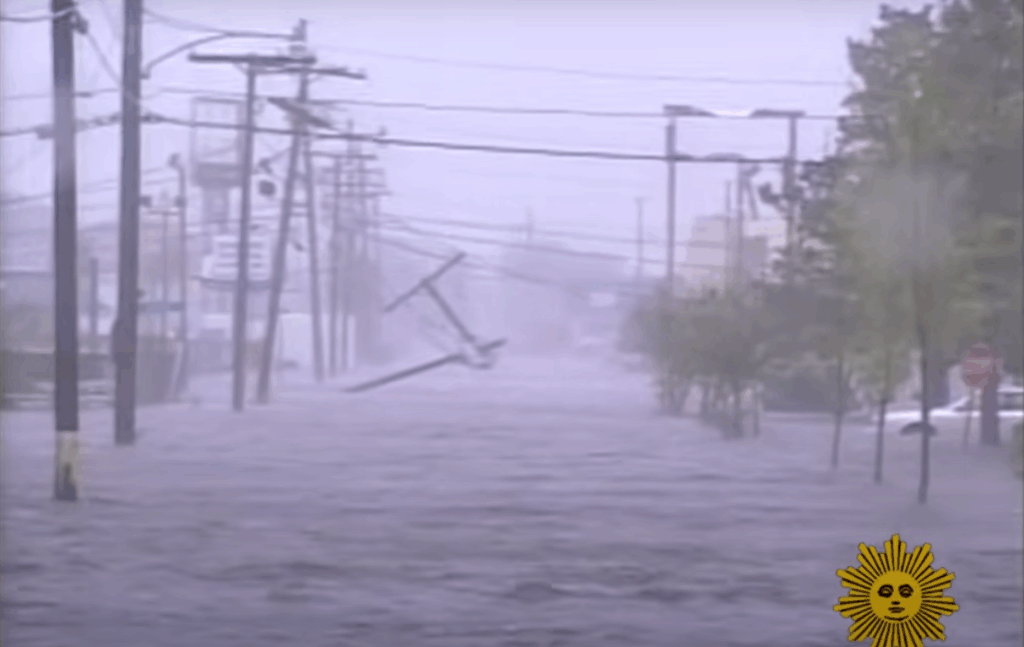
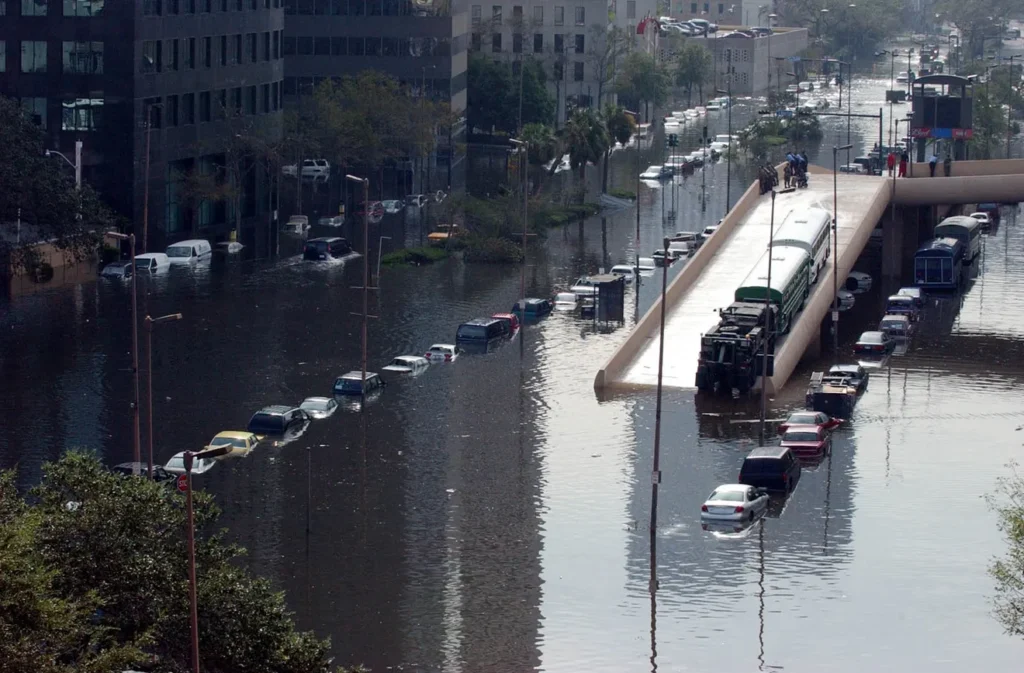
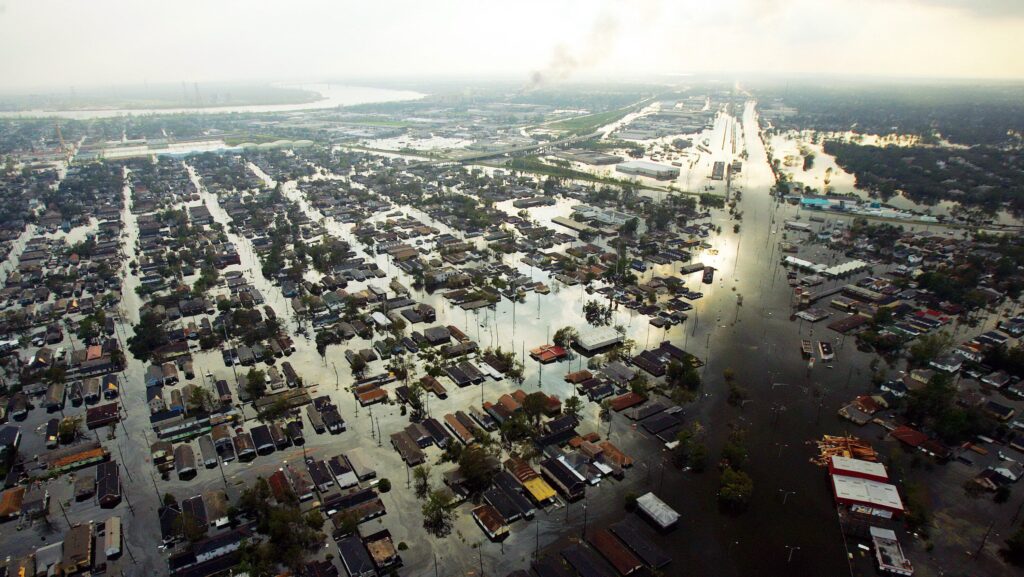
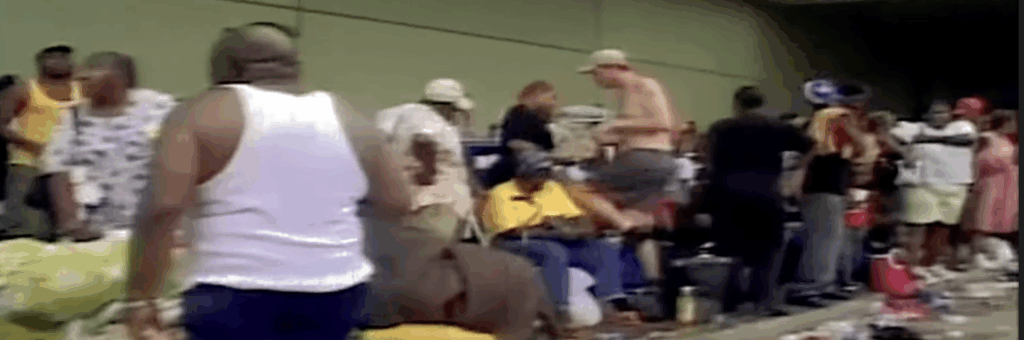
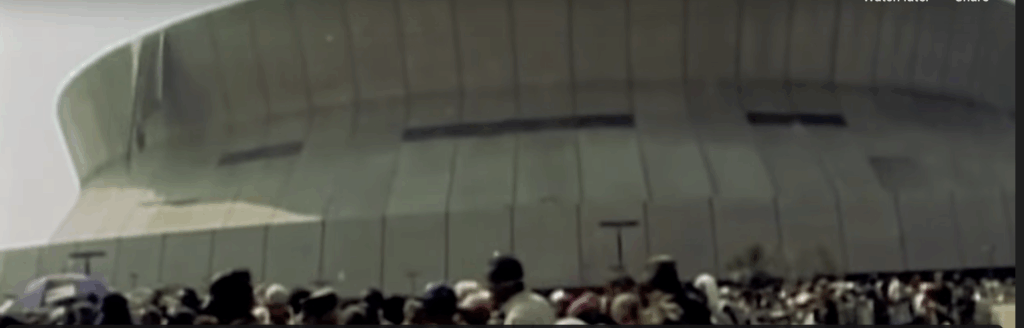
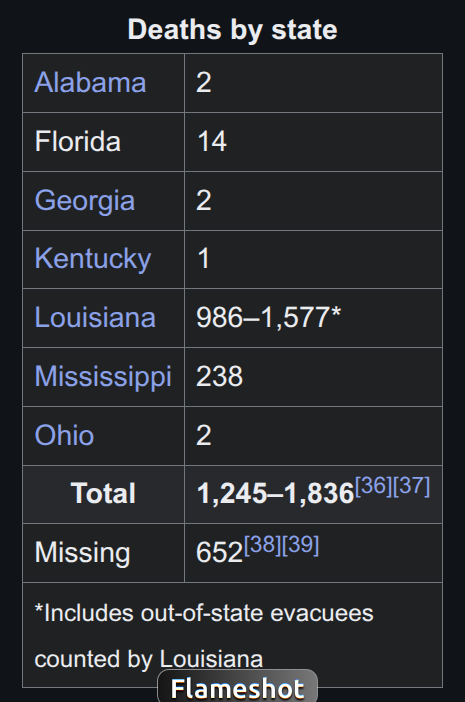
Ultimately, there have been several studies conducted which cast a doubtful light on many of the numbers, but THESE are confirmed:
The first really impactful item that sent shivers down our spines was when word began to filter up to us of frightening events in New Orleans – prisoners were abandoned in their cells, left to the steadily rising waters when their guards abandoned them and fled their posts. Thereports were horrendous. Already off-balance with our own conditions, our only thought was “Could we be next?”
Conditions were in chaos in the gym….
Nothing happens to improve your lot in life immediately. Anywhere. In prison it takes an inordinate time longer.
So, our personal safety and provision of necessities obviously took the back seat on the bus. We had nothing and were packed 400 into the gym.
When we first arrived, bedlam reigned. There were no supplies, no bedding, no hygiene materials, no food arrangements, not even rolls of toilet paper. Not even the free people knew what was going on, what to do, who to get advice or instruction from. All of the Main Prison supervisors were stretched out trying to get a handle on the situation. Sometime in the early morning of the next day trucks arrived carrying old army-surplus styled folding green cots and we were all given one, so that at least we could get up off of the floor.
Prison being what it is, when we were told that we could only bring one pillowcase with us, most guys stuffed their bags with cigarettes/tobacco, instant Maruchan soups, cookies and a change of clothing and – hopefully – a bar of soap and shower shoes, maybe a roll of toilet paper.
The gym was split down the middle by a floor-to-ceiling chainlink fence. On the side where I was told to go, there was one toilet – an old ceramic relic that had to have been 50 years old. Stained, cracked and leaking, when flushed it spread a flood of sewage across the red tiled floor, so that when anyone used the toilet when they walked out, they spread the sewage across the gym floor. And cleaning supplies? Non-existent.
It took weeks before we could get anyone to install phones and set up mailboxes so that we could call or send letters out to our families and friends. In the meantime, all we could do was fret, worry, work or sleep from utter exhaustion. Just a few days after we came to the gym, the sprawling Rodeo grounds were taken over by dozens of officers for processing and intake of hundreds of prisoners from various parishes.
PDF Montage of Dan Bright – Exonerated from Angola Death Row And His Personal Experience With Katrina

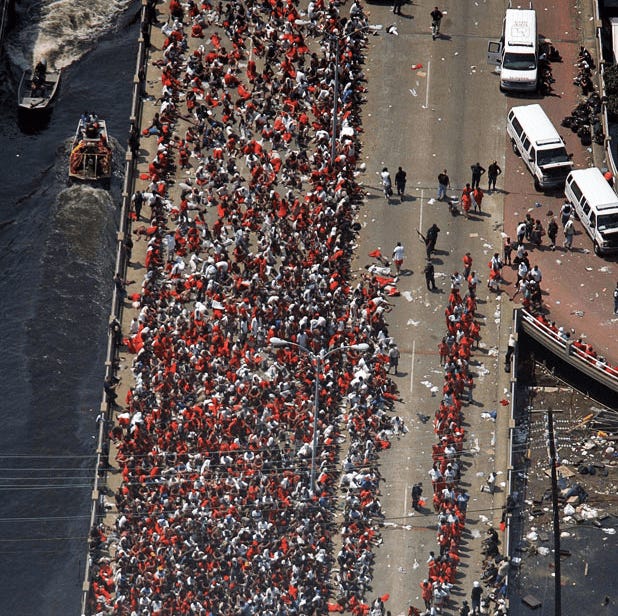
Thousands of OPP Prisoners were eventually herded onto a bridge/overpass where they would remain for several days without food or drink, in suffering heat. Finally, they would be rescued and lowered into boats that carried them to safety, and into another waiting mass for transfer to other prisons, other jails.
“It was complete chaos,” said a corrections officer with more than 30 years of service at Orleans Parish Prison. When asked what he thought happened to the inmates in Templeman III (A building within the OPP complex), he shook his head and said: “Ain’t no tellin’ what happened to those people.”
“At best, the inmates were left to fend for themselves,” said Carey. “At worst, some may have died.”
The stories of mass deaths of abandoned prisoners have not been verified, though a number of individuals and organizations have conducted their own studies and investigations have certainly pointed in that direction. If true, it would have called for a massive coverup.
In the gym, which was slowly beginning to become at least habitable, things became a bit more chaotic as we settled into a routine of work – both our regular jobs (plumbing, carpentry, electrical, etc.) and “emergency” cleanup work, repairs and preparing parts of the prison to house evacuated prisoners from parish jails. It was only the beginning.
While New Orleans received the most attention, smaller communities, particularly in coastal parishes east of the city and around Lake Pontchartrain, experienced massive damage from the storm surge.
- Slidell: Located on the north shore of Lake Pontchartrain, more than 40% of the city was submerged by the storm surge, which topped 20 feet in some areas. More than 95% of homes and businesses were damaged.
- St. Bernard Parish: The sparsely populated areas of this parish were hit unexpectedly hard by winds and floodwaters. The emergency center was submerged, and an estimated 40,000 homes were flooded.
- Plaquemines Parish: Located south of New Orleans, this low-lying, rural parish was “devastated by high winds and floodwaters”.
- Mandeville: Communities along the north shore of Lake Pontchartrain were significantly impacted by a storm surge of 12 to 16 feet.
Other even smaller towns simply disappeared. When evacuations finally began in earnest, people filtered out to Baton Rouge, Houston, Dallas, Atlanta and some even farther – Tennessee, Chicago, Arkansas and far-flung destinations.
After about 2 weeks, semi-trucks, pickups and even SUVs would begin arriving, packed to the gills with donations from churches, stores and organizations who had learned of Angola’s plight.
My own personal adventures would soon begin.
Leave a Reply